Random Thoughts on the Ageing Male Body (or Is It Just Me?)

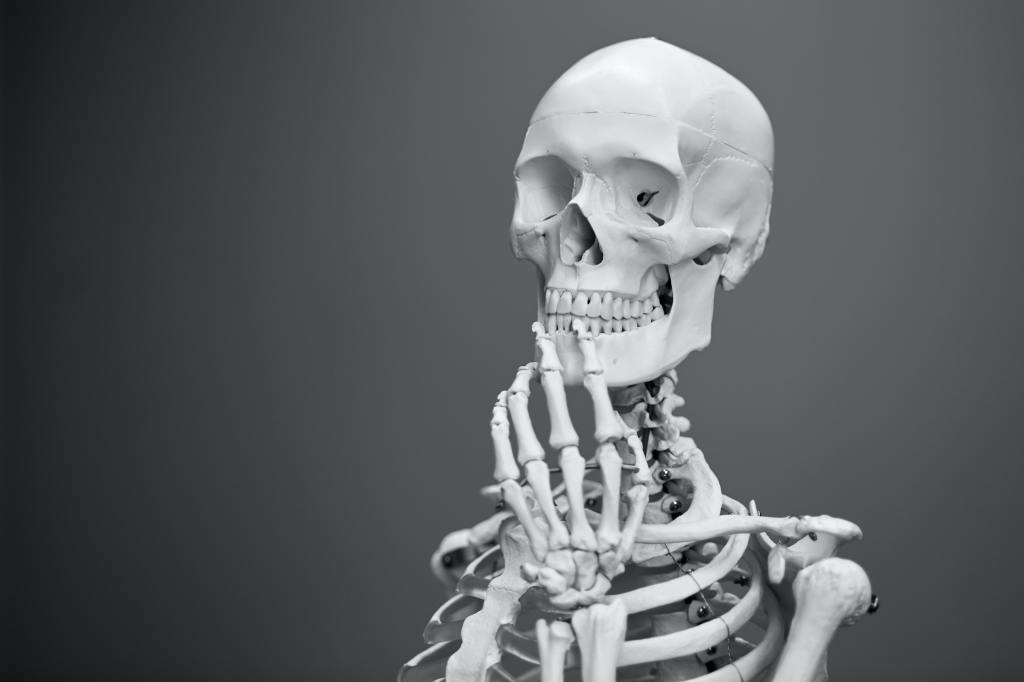
So much changes about your body as you get older.  What you once looked down upon as your pride and joy, now looks like a pickled walnut.  The parts that maintained close proximity to it, hanging in close attendance, now maintain a closer proximity to your knees.  I can only believe that nature contrives for them to drop so low in order to provide some kind of counterbalance as you become less steady on your feet.  Naked these days, I look like a Grandfather Clock with twin pendulums.  And they’re becoming bald!  What’s happening there?  Who ever heard of testes with alopecia?  They look like I’ve got two wrinkle-headed Matt Lucas trapped inside my pants.  An ageing man’s body is nature’s way of saying ‘And you can pack that in!’

‘That’, of course, being something that most men are biologically tuned to pursue well into later life even though such things do tend to become much less frantic: far less urgent over the years.  There is one very good reason why the old-fashioned ‘knee trembler’ for instance is excised from the sexual repertoire as you get older and that is that once trembling, it becomes impossible to dissuade the ageing joints from collapse.  The mind and all relevant areas remain keen, but the joints and limbs that are required to put in the actual effort, rather less so.  There’s only so many times a hip can ‘click’.  When she is wearing a surgical girdle and you are in knee supports, enthusiasm starts to wane.

There is always someone willing to point out that ‘Charlie Chaplin became a father well into his seventies.’  Well yes, but he also had bandy legs and a Hitler moustache.  There’s no wonder he needed that walking stick – randy little bugger.  Doubtless what a lifetime of chewing liquorice boots does for you.  And that particular process does, of course, involve the participation of a younger woman – one immune, presumably, to the smell of urine and TCP – one prepared to plan a funeral whilst still breastfeeding; to book the church without being certain of whether it will be for christening or funeral.  Maybe the vicar could do some kind of BOGOF* deal.

I now have the kind of tits that I always wanted in a girlfriend.  I always wondered why men have nipples.  Now I know that they are there to stick on the end of your moobs as you get older.  From an arse that you could bounce a ping-pong ball off, to one that looks as though it has swallowed a basketball in just a few short years.  Somehow all muscular definition has given way to amorphous blubber.  Even when I lose weight, I still look fat.  It’s like being wrapped in obese skin.  It no longer bounces back into shape, it just hangs there like the semi-sloughed remains of a once-fat salamander.  I look like I’m made from some sort of memory foam with Alzheimer’s.

Whatever the level of your body neurosis as a teenager, you have to admit that you look far, far worse today, although old age does offer a glimmer of hope to even the most body dysmorphic among us because there is a definite moment, a trigger-point in the ageing process, at which you suddenly look at yourself naked and think, ‘You know what, I don’t give a f*ck.’  I remember reading, some time ago, an article that claimed that young women find the ‘dad-bod’ sexy, and the only possible explanation I can find for it is that the article was written by a delusional old man: the kind that flirts with his daughter’s friends and makes inappropriate remarks to his sister-in-law; that goes to the spa and accidentally leaves his dressing gown half-open all day – until the cat pounces.

Nobody – most particularly the ageing – wants to look at an ageing body.  The best thing you can do with it is to let it carry your head about, make sure it goes to the toilet before it needs to go to the toilet and remind it, whenever it starts to get carried away with itself that, whatever it is that it thinks it can still do as well as it once did it, it can’t…

*Just in case this is a peculiarly British acronym, Buy One Get One Free.

N.B. This piece arose from a need to shout rather than whisper for a change.  If it’s any consolation, it’s unlikely to happen again.

Wasted Opportunities (part two)

Photo by Mwesigwa Joel on Unsplash

One of the few things I actually do remember doing during this officially sanctioned twenty-four month work avoidance scheme was to write ‘articles’ which I posted on the Sixth Form Notice Board for the entertainment of my peers and educators.  The internet (along with mobile phones, laptop computers, pocket calculators and Salted Caramel Mars Bars) did not exist, but this cork wall became my blog.  I was regularly encouraged by tutors to stop ‘posting’ on it, but I was never prevented from doing so.  I live with the hope that somebody gleaned something from what I was doing, other than the conviction that they were in the wrong job. 

On the first day of my Sixth Form studies, the impossibly old history tutor told me that he considered that ‘as I was now an adult’ he would be setting no home work, but he would rely on me to hand in essays on subjects of my own choosing for his appraisal at will.  Consequently, adult that I was, I didn’t hand in a single one and failed the subject abjectly*.  I did scrape a pass in Art despite handing in ‘coursework’ all of which was started the night before in an orgy of Coca Cola, Chipitos and poster paint.   Believe me, I take no pride in this, I am ashamed of my behaviour, but I can’t go back and change it.  I am stuck with that past and it has dictated my present.  The ‘missed opportunity’ has provided the framework for my entire adult life.  I have had only three full-time jobs in my life, giving me a total of forty four years continuous employment without even the slightest hint of ambition.  I have only ever attended one job interview and I vowed that, despite getting the job, I would never attend another.  I have been head-hunted twice, which probably says far more about the paucity of heads around here than it does about me.

Having seen both my children through University I decided to find out if I was capable of doing it myself and, having discovered that I really can apply myself when there is no conceivable benefit in doing so, I now have a Degree of my very own, of which I am very proud even though it merely makes me ever more aware of what I could have achieved forty years ago with just a little application.  (No, I am not talking about Clearasil.)  Who knows what I could have become (a pompous prig I fear).  Would I have been happier?  No, I’ve been married for more than forty years and my wife still talks to me from time to time.  We have two brilliant daughters and four life-enhancing (though energy-sapping) grandchildren – I’ll definitely settle for that.  Would I be richer?  Possibly.  I may have retired much earlier, but then again, I may have died.  Would I be more fulfilled?  It’s very unlikely unless my university education involved developing strategies for not losing interest in what I have written at the very second I have stopped writing it.  I don’t really bother with even the pretence of ‘sending stuff off’ these days.  Old Git Lit has never proved to be the Book Club  draw I thought it might be and TV and Radio are currently only interested in what you have to offer if you are already famous for doing something else – tying knots in cherry stalks with your tongue on Tik-Tok or being third-last voted off Love Island.  I fear the proof that it is not merely my lethargy that forms a barrier to success, but a complete lack of talent, might just kill me.

At least as it is, I always have something to write about.  Let’s face it, disappointment is always good for a few hundred words.

*I offer, as some kind of mitigation, the fact that the set text was the God-awful ‘Origins of the Second World War’ by A J P Taylor, an exciting subject for a post-war eighteen year old, rendered into blancmange by an English academic – the foremost historian of his time – of, I estimated, at least a thousand years old, with all the writing verve of a Grattan’s Catalogue compositor. 

Wasted Opportunities (part one)

Photo by Mwesigwa Joel on Unsplash

When I look back on my schooldays, my overwhelming sense is one of wasted opportunity coupled with the intense sensation of crushing disappointment and the faintest scent of Mycil Foot Powder…

I was a bright kid in my early school days and I cruised through my eleven plus* without any real idea that I had ever even taken it.  This is the pattern of my life: I am successful at things only when I don’t realise I am doing them.  In retrospect, that is the point at which everything started to go wrong.  Those of us who ‘went up’ to the grammar school from the council estate became class traitors, the enemy of some of those we had grown up with and, although I’m pretty certain that it never even occurred to any of my new school friends, I felt keenly a class structure that I had never encountered before and, most particularly, my own place at the bottom of it.  Worse, I had always been one of the brainboxes at my junior school, but here I was in the midst of an intake of about a hundred kids, all of whom I felt  were considerably brighter than me.  (They were.)  I knew that I was going to find school a challenge, but I was not prepared for the misery that a walk home through the streets of my formative years was to bring me, bedecked in the reviled Billy Bunter cap and blazer** I was forced to wear, facing the hatred of those whom I had formally thought of as friends.  A daily trip from school gate to Dante’s abandoned tenth level of Hell.  It was alarming how quickly I cracked. 

I buckled down for a while, tried to work my way through it – in class I had my hand up more often than a trainee vet – and at the end of my second year I was awarded the prize (a book about Tutenkhamen that I still have to this day) for ‘Progress and Industry’ which, even then I understood was a euphemism for ‘stupid, but tries hard’.  Armed with this knowledge, I immediately stopped trying hard and became a full-time pain in the arse instead.

I scraped a handful of GCSE passes by whatever means, I am not sure, having reached a point where I did not even attempt to offer an excuse for not doing my homework.  My low point being an assault on an English Literature exam having made no attempt whatsoever to read any of the three set texts: Twelfth Night a play that I thoroughly enjoyed seeing live, but could make neither head nor tail of on paper; Far from the Madding Crowd the coma-inducing text of which I hoped to bypass by reading about a quarter of a revision guide, and The Prologue to the Canterbury Tales which I saw no point whatsoever in even pretending to have read since I was so out of my depth by the foot of the first page that I would have required rescue by the RNLI***.  Never-the-less, for reasons I can only begin to imagine, I was offered a place in Sixth Form – a future-life enhancing gift that I gratefully accepted by making no effort at all to study during the two years I was granted.  For whomever it was who saw something in me back then, and for all of those who had to put up with me during those two years – most especially those who had to try and ‘teach’ me – I can only offer my sincere apologies.  I do, at least, now have the maturity to know how badly I behaved towards you, and the self-awareness to understand that I completely blew a chance that I didn’t really deserve in the first place. 

An opportunity wasted on an almost Oliver Reed scale…

*A basic IQ test, taken at age eleven, and the means of determining whether one went to Grammar School and took ‘O’ levels or went to Comprehensive School and learned to smoke.  That the most successful people I know failed the eleven plus, and most of those with emotional difficulties passed it, probably tells you all you need to know.

**God knows how my parents afforded it.  It cannot have been easy for them and, as my gratitude levels were below zero, not terribly fulfilling.  They never complained.  I wish they had.

***The Royal National Lifeboat Institute

Westhall Parish Times

Photo by Suzy Hazelwood on Pexels.com

…The issue of dog fowling has again reared its ugly head in Westhall-cum-Hardy and Len Best (our village vet) has once more asked me to stress that it is not possible to cross a chicken with a dog.  Dogs do not lay eggs.  Chickens will not fetch your slippers.  Please stop locking them in rooms together, they will not play ball (well, the dog might) – and the results are always unfortunate, and often messy.

In his Village Crimewatch feature this week, PC Dunne has asked me to make you all aware of a series of burglaries which have recently taken place in the village and advises that whoever has caught the perpetrator should release them as soon as possible so that they can get medical attention and the dog get its distemper jabs.  Remember, nobody wants the press back here again.  He has also asked me to inform you that there has been a case of vehicle tampering in the village this week (quite unassociated with the goat tampering featured in last week’s magazine).  If whoever has taken the wheel off Mrs Crerrand’s roller skate returns it, in full spinning order, within the next twenty four hours, there will be no police action taken and Tom Crerrand has promised that he will leave the petrol exactly where it is in his garage along with the axe handle and the pitchfork.

On a more cheery note, the vicar, Reverand Sadler, has asked me to remind you all that the Westhall scarecrow festival is due to take place next week and entries must be listed by Sunday.  He reminds you all that the festival is intended to be fun for all the family and not an opportunity to see whose creation can cause the most children to wet themselves.  Doctor Foulkes has categorically stated that he will not be handing out sleeping pills to the under fives again this year.  Also, if you are planning to erect your creation on property that it not your own, please ensure that it does not seep until the week is out.

You are further reminded that the ‘Best Kept Village’ judges are visiting next week.  Bribes, we are told, will not be accepted – although there is no reason why they should not be offered.   After the popularity of Mrs Charlton’s brownies amongst the male judges last year, she has promised to display them again this year and Perfidia Burns will bake another batch of her autumn muffins as soon as Sid Brennan has harvested whatever it is he is currently growing in his greenhouse.  I anticipate a very good vote from the panel again this year and I am certain that if that happens, the cat will find its way safely back to the chairman’s wife within the week.

Finally, Ernie Aston, village postman for the last fifty years has asked me to advise you that his son, Ernie, will be taking over the round from Monday and on that day Ernie (senior) will be holding an auction of all undelivered mail to finance his retirement.  As usual, all mail for the neighbouring villages of Lusby-by-Scrotum, Canker and Ulceby-by-Lateral can be found in the beck.

P.S. Don’t forget, it is recycling collection this week.  After the unfortunate incident with the widow Perkin’s lodger last month, you are advised to check very carefully exactly what it is permissible put into the bin.

Westhall-cum-Hardy is a village I created long ago for a very dark radio comedy (never produced obv.) which I would, to this day, ideally like to be voiced by the erstwhile Mr Underfelt.  It may one day appear as a podcast or possibly more likely, in the fullness of time, as six very long posts in these very pages…

The Diggers at the Gate

I long ago resigned myself to the loss of view and seclusion.  I have fitted a blind in expectation of the day on which I first see not the setting sun through my office window, but my new neighbour’s bathroom.  I considered myself ready for everything the builders were to bring, but I was not.  I was not ready for the noise of diggers and bulldozers clanging away throughout the daylight hours, digging up soil and stacking it into long, low banks; digging it up again and stacking it into short, tall piles; digging it up once again and stacking it into a thousand giant molehills.  I have no idea why they are doing this, but the resultant dust storm ensures that the garden, for now, is a complete no-go zone.  The last two weeks have been about nothing other than muck and noise and shifting piles of soil presenting me with an ever-changing moonscape each time I open the curtains.

The dust is unbelievable – you will just have to believe me – covering every outdoors shiny surface we have.  Our black glass topped tables are now bright orange, home to a good half inch of prime topsoil.  The view through our garden mirrors is like a sepia photograph of years gone by.  The sun that shines through the windows into the house casts a strange ochre hue into the rooms that makes them somehow darker.  The greenhouse appears to have been at the centre of a volcanic eruption.  I am sure the airlines will have to guide aeroplanes out of our airspace.

And all the time the relentless ‘thrum’ of heavy, yellow machinery doing its almost balletic ‘thing’ just a few feet behind our low garden wall: digging and stacking, redigging and restacking, clanking and grinding and banging and banging and banging, whilst in the sky we have the incessant screech of the gulls (Why, I have no idea.  I don’t think they’re digging fish up out there.) that have replaced the kestrels and the buzzards now that the mice and rats and voles have gone who-knows-where to find somewhere quieter to hang out. (Toad Hall perhaps? – Or probably more likely, the now-redundant outside seat covers in my shed.)

I have no idea how long this will last before the scaffold and the bricks and the men in yellow hats move in.  Presumably some time after the men in suits with clipboards and yellow hats move out, when a new brick wall will begin to climb its way across my horizon, which it will all-too-soon dominate.

And I can’t pretend that I’m not fascinated by it all: watching the buildings slowly encroach from the left, the ground being prepared straight ahead and the lorries growling in from the right.  Watching the green become brown, the brown become stone: little boxes entwined within snaking black rivers of tarmac road; watching the trees and the grass and the hares and the deer and the mice and the rabbits pack their bags and leave for a none-too-distant silent landscape pricked only by the song of a steeply ascending skylark, the shriek of pheasant, the baby cry of a fox, the curse of an errant golfer…

A year or so from now it will all be over and we will soon grow used to looking out onto a brick wall.  We’ve started to wonder what colour it will be.  Will the new people love their garden?  Will they grow honeysuckle up the wall, or will they hang a basketball hoop?  Will we talk over the garden fence?  Will they ask us round to a welcome party in their garden?  Will we learn that all they want is a little taste of what we have had for over four decades?  Of course we will.

Those on the growing fringe of the oil-on-water spread of development will briefly have country views.  Their successors will have nets to stop the golf balls and (according to the plans) shimmering blue, reed-lined pools to control the flooding.  The golf club will have a massively increased clientele, as will the doctor’s, the school and the shop – when all this has finished, the village will have trebled in size – and the runoff rainwater from the acres of new concrete will go… somewhere where it is nobody’s responsibility, and somewhere, presumably, where it will meet the new school, the new health centre and the new shops which appear to have quietly disappeared from the plans.  It’s hard to believe that we could move from the edge of a village to the centre of a town without even the need for a removals van.  Never mind, we have a shiny new road which will ‘facilitate further growth’ apparently and the man from the council tells us that the massive development here will mean that other villages escape almost unscathed.  They’ll get our mice and rats and voles, our foxes and our birdsong, and maybe it serves them right…

The photo at the top of this page is the view I have had from my office window for over forty years.  The photo at the bottom is the view I have today.  Can you spot the difference?

Uneasy Sits the Passenger

Photo by SevenStorm JUHASZIMRUS on Pexels.com

I am a very occasional taxi user.  The taxi journeys that I do take are largely limited to holiday transfers when my usual reserve has been left at home, and drunken solo journeys home when all constraint has been buried under a polystyrene tray filled with chips and gravy.  If I go anywhere beyond walking distance I will generally drive myself or be chauffeured by my wife.  We take ill-tempered turns at being teetotal for the evening.  There is no rancour between us on the silent, sighing journey home, just a latent brooding antipathy that lingers deep into the following day.

Unfamiliarity, though, always leads to uncertainty and, in this particular instance, a sea of taxi dilemmas.  From the start I am havering.  If I am en-taxi with my wife, I join her in the back of the cab, but if I am alone is it good form to join the driver in the front, or is it taboo?  I do not know.  I know that when you are alone in a taxi conversation must be made with the driver, and hollering over their shoulder is not always easy.  Realising that he/she is replying whilst staring fixedly into the rear-view mirror is a little discomforting.  And anyway, what should I say?  How do I stop myself from asking, ‘So, what time did you start?’  ‘Are you working all night?’  ‘What time do you finish?’  If I am drunk I struggle to sound sober, if I am sober I struggle to sound coherent.  I would like to have something that resembles, at least, an adult conversation with the person beside me; to not be the person that asks neither about health, family or enjoyment, but questions only the length of a working day.  ‘So, what did you do before you started driving taxis for a living?’ is usually what finds its way out of my gibbering mouth.  ‘What’s your favourite car?’  ‘Would you sooner be a polar bear or a penguin?’

I once travelled home from a boozy meal with two friends, both of whom left the taxi before me.  I was the most sober of the three of us – possibly of the four of us – and was in the front seat alongside what I quickly realised was a very odd lady driver indeed.  She patted my leg.  ‘I know a quick way to your village,’ she said making a sound, I swear, like someone drinking Chianti and eating fava beans.  ‘I know these country roads like the back of my hand.’   I noticed she was wearing gloves.  ‘I know all the shortcuts, I found them on a Top Secret Ministry of Defence map,’ she continued before speeding into what turned out to be the not-very-long drive to somebody’s front door.  ‘Ah,’ she said ‘I think this must be new.’  She reversed unsteadily, and I jumped out to help nurse her back onto the road.  It transpired that her maps were, in fact, a 1930’s pencil sketch of the nearby airfield made by her grandfather who ‘laid the runway’ and besides, she didn’t normally work in the evening, because her night vision was not what it used to be.  She generally stayed in town these days.  ‘It’s lighter.  Normally I just go from pub to pub.’  I guided her to my home, best I could, getting us onto lit main roads at the earliest possible opportunity.  When we arrived outside my house, she thanked me and I gave her the fare plus a tip, although I couldn’t help but think that she should have been tipping me.  I couldn’t help worrying whether she would find her own way back to town.  Perhaps I should have gone with her…

And the tip.  I always tip a taxi driver – even though it sometimes seems embarrassing to do so – but my daughters never do, arguing that nobody ever tips them for doing their jobs.  ‘Keep the change’ is such an easy option, but sometimes the change is just too much and you have to wait for the driver to carry out the over-elaborate hunt for seven pounds in five pence coins, before you can count fifty pence back into the still open palm whilst he/she sighs cheese and onion crisps into your face.

It is never until you get to your front door that you realise that your keys are in your coat pocket on the back seat of the cab along with your phone, the photograph of the driver’s ID and the name of the company you have used, and you wish that you’d come home two hours earlier whilst your wife was still awake enough to drive you, knowing that you would have no worries at all about whether you should speak to the driver or not.

Almost certainly not.

First Drafts

Photo by John Michael Thomson on Unsplash

N.B. I wrote this and then couldn’t work out quite where to fit it in, until it occured to me that as this is an exceptional week I could post it today and it wouldn’t have to fit in at all. So here it is…

My own first drafts are often clumsy and confused, and nothing like the finely-honed and incisive fare that is eventually laid before you dear reader.  (Ah yes, antiphrasis is not dead.)  First sentences of first drafts are often nothing more than the manifestation of a pen trying to work out where to go and, more often than not, bear no resemblance whatsoever to what results from and evolves over them.  Is it just me, or is it a stage that all great authors (Still not dead!), must work through?  I took a delve into some working drafts of great opening sentences and this is what I found:

“…It was pissing down and the clock in the Town Hall was buggered again. Winston Smith, his chin tucked down into his new hessian shirt, slipped quickly through the controlled access doors of Loveme Avenue flats as, unaware of his presence, the delivery man came out, but not quick enough to prevent the mechanised lever movement from snipping off the brim of his hat.
The hallway smelt of boiled cabbage and old rag mats, but mostly of his coat. Well, not his really if I’m honest, it was much too big for him as he’d borrowed it from his Big Brother [I wonder what I should call him? I can’t just keep calling him Big Brother, that would be mad.] who was twice his size and actually didn’t mind the cats sleeping on it because they kept the rats off. He hated the rats…”
George Orwell – Nineteen Eighty Four.

“…Call me Derek [Kevin?  Maybe something slightly more biblical.  Simon maybe.]  Some years ago – [Never mind how long precisely, it doesn’t matter until I’ve got some kind of idea where I’m going with this] – having little or no money in my purse and nothing much to interest me on shore [Irony: whatever it is, it must be preferable to tar up the crack of his arse and semi-digested weevils baked into his hard tack] I thought I would sail about a little and see the watery part of the world [Is ‘see the sea’ too nursery rhyme?  I think I’d like to be allegorical – although I’d better look it up first.  What should I call the whale?  A blubbery white thing.  Donald?]…”
Herman Melville – Moby Dick

“It was a pleasure to burn.
It was a pleasure to see things eaten, to see things blackened and changed.  Of course, it did mean that Montag would almost certainly lose his job at the bakery but, hey ho, enjoy it while you can, he thought.  The worse that could happen is that the Fire Brigade would come along and put the fire out…”
Ray Bradbury – Fahrenheit 451

“It was the best of times, it was the worst of times [depending on your viewpoint I suppose], it was the age of wisdom, it was the age of foolishness [although sometimes it is difficult to tell them apart, particularly when they both work for the council], it was the epoch of belief [Do I mean epoch?] it was the epoch of incredulity [Check the thesaurus.  Is there another word for epoch that isn’t age?  Incredulity?  What’s wrong with disbelief?], it was the season of Light, it was the season of Darkness [should I just say ‘Autumn’?], it was the spring of hope, it was the winter of despair, we had everything before us, we had nothing before us [like a cheap Chinese buffet], we were all going direct to Heaven, we were all going direct the other way [except for those on the number 13 bus who were going via the shopping centre… Perhaps I should stop writing after I get back from the pub.  I have no idea of where I’m going with this.  Can I base a whole novel on antithesis?  I wonder what I did with that plot about the orphan…]”
Charles Dickens – A Tale of Two Cities

“Here is Edward Bear, coming down the stairs now, bump, bump, bump on the back of his head, behind Christopher Robin. ‘Pick me up you little moron,’ he murmured under his breath. ‘Is there any wonder I am a bear of little brain. Look behind you, it’s scattered all over the shagpile. Most of my intellect winds up in the Hoover. Firm, my head used to be, firm, but now it’s got less stuffing than a British Rail Christmas sandwich. My stitching is less reliable than a politician in a crowded corridor…”
A. A. Milne – Winnie the Pooh

“Far out in the uncharted backwaters of the unfashionable end of the Western Spiral Arm of the Galaxy lies a small unregarded yellow sun… [I’m not sure about this.  Is it all just a little bit glib for a GCSE astronomy text book?]”
Douglas Adams – The Hitchiker’s Guide to the Galaxy

Oh I do like to be Beside the Seaside (or Fractured Thoughts from a Holiday Beach)

Photo by Pixabay on Pexels.com

I have to own up here, I love the beach: I love looking at it, I love walking on it, I love finding unexpected treasures and shiny things on it, but I hate laying on it.  I hate sand sticking to my skin, I hate sand between my toes, I hate it in my sandwiches and I hate it in my shorts.  In fact, now I come to think about it, I love the beach, but I hate the sand.

What a day on the beach does allow me is the unfettered opportunity (thank you mirrored sunglasses) to people watch, and what the people being watched on the beach seem to lose is all inhibition: if they’re going to row, they do so at the top of their voices; if they’re OCD about sand on the towel, they will spend hours sweeping and wafting, never sitting, never laying, constantly ‘tutting’ at whoever walks by; if the first splash of briny against the nethers is unduly cold, they will let the whole world know. 

Women of all ages, shapes and sizes look great on the beach.  Men look fat, burned and confused: wondering how long they have to sit before they can reasonably wander off to the bar; wondering how long they have to keep playing with this stupid biff-bat before they can sit down again; wondering how long they’ve got in the sun before they look like a flame-grilled Manitou.  Scattered along the water’s edge there is always an uneven line of Speedo’d men adopting the pose never seen in any other circumstance: ankle-deep in salt water, legs astride, hands on hips, they stare vacantly out to sea wondering how much further they would have to go out before they could decently have a wee?

Children – surely the only valid reason for spending an entire day on the beach – are being yelled at, cajoled and bribed with ice creams that will be 90% sand before the second lick.  Put a child on the beach and they will head towards the sea.  Put an adult on the beach and their whole life becomes dedicated to preventing the little buggers from drowning themselves, and quietening them when they threaten a screaming fit having been prevented from doing so.  Mothers wearing ill-considered bikinis chasing children are faced with the single dilemma: catch the child or constrain the breast?

On the whole, swimming costumes are made in two varieties: those designed to accentuate and those designed to conceal.  It is the accentuators that are least adapted to the female form and the most likely to put you off your lunchtime hotdog when worn by men.  The concealers are loose and voluminous, giving the beach the appearance of being a sea of animated tents, all attempting (there is nothing on this earth – including sunburn – as uncomfortable as sand in the sun cream) to stop themselves from cooking.

The beach is also always full of couples who, although undoubtedly together, are not yet fully comfortable in one another’s company and for whom the intimacy of having their back creamed by their partner is simply a step too far.  They are easily spotted: they have either a red back or a dislocated shoulder.  They never turn their back to the sun.  The beach is a canvas of bronzed fronts and skinned-fish backs.

Those who do not want to be here – surprisingly small in number – become increasingly apparent as the day grinds on.  They sit whilst everybody else lays, they wear T-shirts and shorts and refuse to eat sun-warmed sand-infused cheese and pickle baguettes, they decline the bottled water on the grounds of it being tepid and full of bread after the children got there first.  They write whilst everybody else reads.

All in all, I have to admit that the beach would probably be a better place without me…

8 Miles High* (or Fractured Thoughts from an Aircraft Seat)

Photo by Shamia Casiano on Pexels.com

Just how difficult is it when the check-in person asks ‘Did you pack the suitcase yourself?’ not to answer ‘No, actually I got the butler to do it.’?

Why are the first passengers onboard always blithely unaware that there is a planeload of others behind them waiting to board?  Why can they never find their seats?  Why can they never open the overhead locker?  Why can they never lift their bags into the overhead locker?  Why can they never close the overhead locker?  Why do they have to stand in the aisle and chat about the fact that they can never do any of the above while the rest of us queue in the rain outside?  (N.B. the opened overhead locker is not overhead.  If you don’t believe me, try walking under one.)

I understand that not a single life has ever been saved by the under seat lifebelt following a ‘forced landing’ at sea.  They are officially there for the passenger’s peace of mind.  Peace of mind?  Really?  All they do to my mind is to make it even more aware that no life has ever been saved by the lifebelt following a forced landing at sea.  (N.B. Forced landing at sea = crash.)

If an oxygen mask falls from the panel above my head the stewards can relax: there is no way I’m helping anybody else get theirs on before I have put on my own.

Why is the eight-year old with Tourette’s always seated directly behind me and who the hell has painted a target for him/her on the back of my seat?

If policeman are getting younger, how come flight attendants are getting older?

Why is my Kindle still on Flight Mode from my last holiday?

Remember, every word read on a flight is forgotten on landing.

Why do I have the passionate need to have aeronautics explained to me as soon as the plane begins to lumber its way to take-off? 

Can we actually trust the same people whose rules insist that a bumble bee cannot fly to design a functional aircraft? 

Why is it impossible to convince myself that the whole thing is not just one big joke – because nothing of this size could possibly get off the ground – and I am the only one not in on it? 

Why does the back not hit the floor when the front lifts off?

Why does every flight contain a single individual who thinks that everybody else on the plane needs to hear his Sonic the Hedgehog progress?

Why is the person I have just spent two weeks trying to avoid always allocated the seat beside me?

Why does the drinks trolley always reach me last?

Why have they always sold out of Jack Daniels?

Why do all on-board Pringles taste of cheese & onion?

What the hell is that noise?

Exactly who is responsible for that smell?

A typical in-flight meal provides approximately 10% of the nutritional requirements of the average gnat.

Why does the person on the seat between me and the aisle never need the toilet?

The Earth is our friend until we are above it, then it is definitely the enemy.

A mosquito on a plane is worth 10,000 in the bush (and, let’s face it, nobody wants a mozzie in the bush).

However many people are on a flight as it comes into land, not a single one of them actually believes that a plane can fly quite that slowly.

Why do I always believe that I just might possibly be an international terrorist as soon as the passport official looks at me?

Why do I never recognise a single person from my flight at the baggage carousel?

Why is the belt on my suitcase never the colour I remember?

Why does the wheel always start to squeak as I pass through ‘Nothing to Declare’?

*Actually, commercial airplanes generally fly at somewhere between 5.9 and 7.2 miles high.  What were the Byrds thinking about?