Without the Long-Term Commitment

Photo by Pixabay on Pexels.com

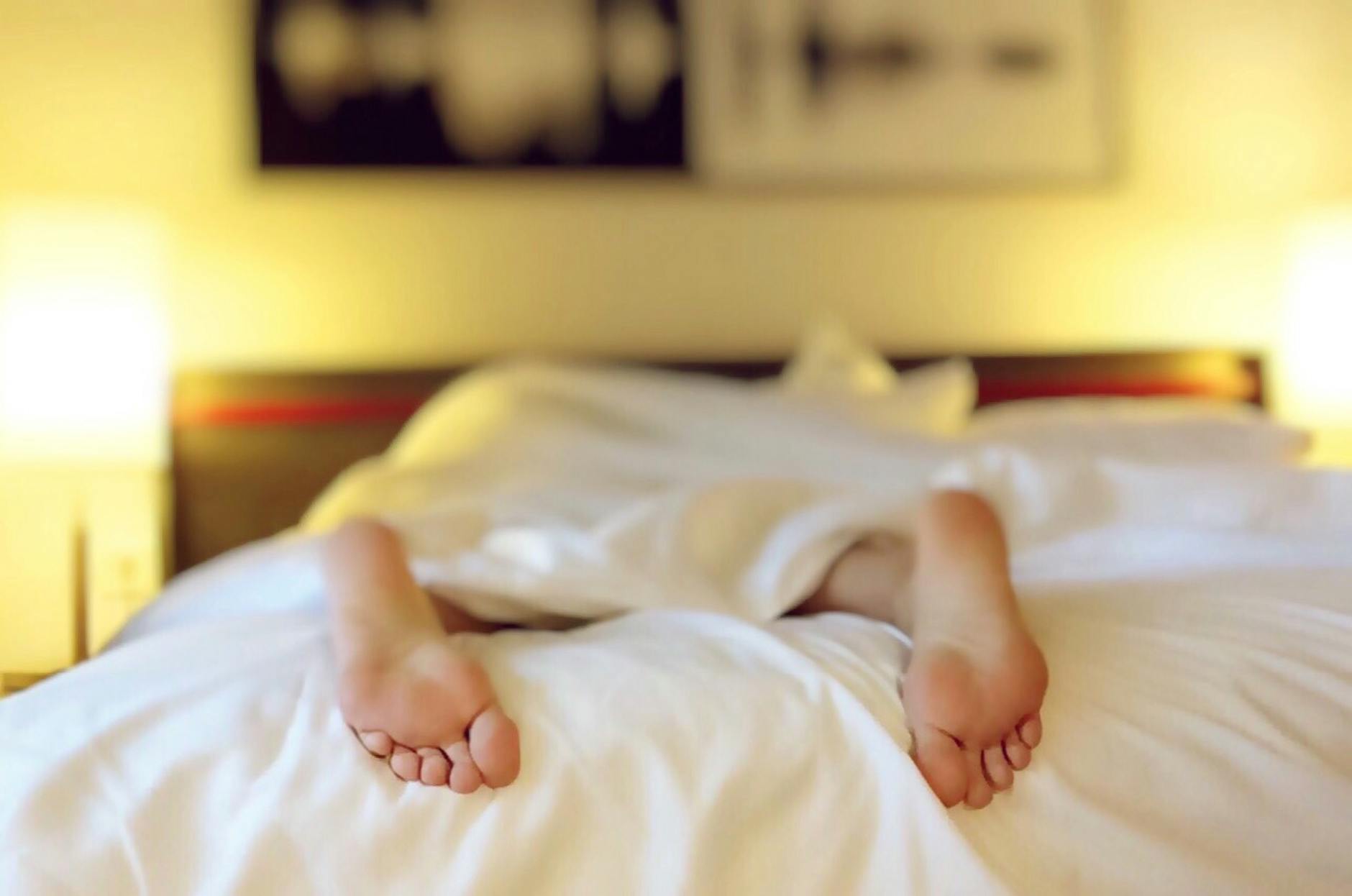
So, you’ll know the moment – I’m sure you’ll know the moment – I think we all know the moment, when you are ill, or you’re low, or your mouth has run away with you – again – and you go to bed thinking “Things will be so much better in the morning.  If I can just get a good night’s sleep, everything will be brighter: my cold will have gone, my mood will have lifted, I will not be outed as some kind of anti-religious bigot by the vicar’s wife.”  Well, I have to tell you – I am sure you will already know – that things are seldom better in the morning: if you have a cold, the snot is still there, in fact it may have filled your entire head and congealed into something resembling a pea-green panna cotta.  Colds do not get better overnight.  Colds only ever improve following the consumption of malt whisky.  Colds liquidize the brain and then let it dribble out through the nose.  Every single thought is solidified into a single impulse to find a means of breathing that does not involve a slack jaw, permanent drool and the sound of a camel gargling custard.

It is a peculiar type of optimism that relies on sleep for a cure when sleep is so difficult to come by: when the difficulty in breathing is magnified ten-fold at the moment the head hits the pillow; when the face has closed the doors on oxygen.  Sleep is not going to come easily, when the possibility of never waking up is so present.

Perhaps the belief that sleep will bring relief to aching bodily infrastructure is more logical.  Muscles may well be able to use the hours of idleness to repair and refresh, but equally they may choose to use them to set like stone.  A small 8pm tweak can easily turn into complete calcification by 8am, and joints that in youthful vigour would have used the hours of darkness to self-lubricate now throw up the barriers, sing La Marsellaise and declare that, henceforth, they ‘will not be moved’.  Sleep, with age, merely allows the body to magnify its woes before the morning comes.  Each ailment struggles to enhance its performance in a bodily version of Top Trumps.  Tumbling into bed a fit and mobile man can, these days, precede the possibility of waking up with rigor mortis.  Only the ability to moan loudly will stand between you and the hearse.  An unexpected posterior eructation could be the only thing to alert those around you to the presence of enduring existence: “Excuse me for asking, but do corpses normally fart?”
“No vicar.  Nor do they smell quite that bad.”

Sleep after a day of vigorous activity – which at this age could include anything from tying one’s own shoelaces to removing the cellophane from a ready meal – will almost certainly allow the introduction of superglue between all moveable surfaces.  Both body and mind deteriorate through the night time hours.  There are occasions when you may sleep for eight hours only to wake up years older and yet the medical mantra remains unchanged: “Get more sleep.  It will all be better in the morning.”  Try taking a worry to bed and see how much better that is after a night spent fixating on a worse-than-worse-case scenario that appears, with the breaking of dawn, to be the only viable outcome.  What starts the evening as a flickering light bulb becomes bankruptcy, homelessness and a strange fungal infection that no amount of sleeping will put right.

Sleep is not medicine, it is a void into which the crap of the day falls and festers.  I currently have the kind of cold that will only allow sleep if I take it in an upright position.  When I wake in the morning – as long as I am not being too presumptuous in that assumption – it will not have gone.  It will have taken its opportunities.  Ancient man learned to sleep through the night because he came to realise what a pain in the butt staying awake could be: hours drag in the darkness, fires need stoking, feet need warming and the telly’s crap.  Waking up is the only good news about waking up.  (Not waking up is definitely bad news.)  If I’m lucky, my cold will improve during the day and I will find the kind of sleep that feels as though it will not make things worse.  And then I’ll need to pee – you know that moment – I’m sure you know that moment…

“Sleep is death without the long-term commitment.” – Lea Krinksky

Night Thoughts

I’m sitting here, in the darkness of night, lit only by the sepulchral glow of LED, trying to decide between being medusozoa or monkey.  You know what it’s like: all you want to do is to offer a little amusement, to make people smile, even occasionally to make them laugh: to offer a small diversion for the less than five minutes it takes to read what has taken – although it seldom shows – considerably longer to write.  From dog bowl to pavement takes many hours.  To put your foot in the by-product takes less than a second, but once you have liberally coated your shoe, you will walk around for days before you realise where the smell is coming from.  It will take even longer to chip it out of the sole and shagpile.  When you read, words seep in.  They form a lining to the brain that you may not even realise is there, until some of it starts to peel.

It is common – although possibly apocryphal – knowledge that we lose thousands of brain cells each day as we get older.  The understanding that the holes are growing ever-larger hangs over all of us.  Names, appointments and car keys fall into the cracks with alarming regularity.  Habits drop into fissures, swirl around with no means of escape, and become obsession.  Just try going to bed without checking the locks: you will not sleep, you will have to get up at some stage during the night to check them.  Eventually you will have to do so even if you have already checked them before turning in.  It becomes a battle of wills: You versus You.  You versus your own obsessive tendencies:
“Did you check the locks?”
“Yes I did.”
“Are you sure?”
“Yes, I’m sure.”
“Really really sure?”
You might as well get up and recheck straight away, because otherwise you are going to have to listen to yourself whittle for the rest of the night:
“Were they locked?”
“Yes.”
“Are you sure?”
I know people who take photographs before they go to bed, but it wouldn’t work for me:
“Yes, but are they today’s photo’s?”
“Yes.”
“Are you sure?”

Sleep, itself, becomes a more slippery beast as you get older.  It becomes a matter of either remaining unconscious right through (despite the concern that ‘right through’ might just lead to eternity) or not sleeping at all.  And when you’re up in the night?  Well, you might as well read, hadn’t you?  You might as well have a cup of tea, you might as well have cake, and if it is your mission to amuse, you might as well turn anxiety into entertainment.  After all, whatever you write in the wee small hours cannot possibly make any less sense than what you write at any other time and it always pays to keep the brain active, right?  Just a quick glance at the internet will give you something to discuss won’t it?  Well no, because there is only so much you can say about skateboarding cats…

So what else is there to find?  Well, this being the way that the internet works, what I found was an article from October 1996 (Aging Brains Lose Less Than Thought by William J Cromie, The Harvard Gazette) headlined like today’s big news which asserts that ‘Oldsters’ – a term that is used throughout and is, as far as I am concerned, more than sufficient defence in a homicide trial –  actually lose far less in the way of brain mass as they get older than was previously believed, because the gouda-like specimens extruded from the elderly craniums for post-mortem rummaging in the past had all been those of dementia sufferers.  The point being that if some degree of dementia was not present, the diminution of mental processing capability would not have been so advanced.  Unless, of course, some degree of dementia is present in everyone over a certain age e.g. 16 years.  It also goes on to say that although we do not necessarily lose brain cells as part of the normal process of aging, those that we do have, do not work so well which – for reasons my own poor, enfeebled elderly brain cannot fathom – is much better.  Perhaps a skull full of jelly fish is far better than one half full of chimpanzees.

I’ll spend the night mulling it over…

Sleep


sheep.jpg

There are times when I cannot turn my brain off. In the middle of the night it churns and chugs relentlessly on, like a football commentator when nothing is happening on the pitch: the incessant narrative being infinitely more tedious than the inaction it describes. When I am trying to sleep and my brain finds itself at a loose end, it generously furnishes me with a full colour replay of the day just gone, with all the bad bits on repeat. It reminds me of a thousand things I didn’t do or didn’t say, and provides me with a thousand rejoinders it couldn’t quite conjure up when they were needed. My brain could do with some sort of mute switch; it would seriously benefit from a sleep mode, or at the very least a pause button. When I close my eyes, somebody has left the lights on. It’s like attempting to read James Joyce’s Ulysses – I know that something or other is going on, but I haven’t the foggiest idea what it is.

Tell me, what kind of brain goes into overdrive when the rest of the body is crying out for sleep? I have tried very hard to analyse what it is that keeps me awake at night: is it an imprudent chunk of extra-mature Cheddar perhaps, an ill-judged scary movie or a super-strong after-dinner coffee? To find oneself pondering the root cause of this inopportune wakefulness is inescapable. Should I have had that midnight snack? Should I have had that last little whisky? From tomorrow I shall drink nothing but water. From tomorrow I shall eat nothing but horsehair and mung beans.

The darkness of night provides the ideal environment in which to review the day just gone and to preview the one to come. To ponder cause and effect: am I worrying because I am awake, or am I awake because I am worrying? I do not know what wakes me in the middle of the night, but whatever it is, I know that having been woken, what keeps me awake is anxiety; either over something that has happened in the preceding twenty four hours, or over what might yet happen before my next fruitless search for slumber. If I could just reconcile myself to my own inactions, I would, without doubt, sleep much more soundly.

In common with all my senses (and I count ‘common’ amongst them) the acuity of my hearing is fading with each passing year and yet, in the middle of the night, I can hear a spider farting in the next room. How does that happen? (And, here I go. I’m now trying to work out if spiders are anatomically capable of farting. My entomological knowledge being, at best, sketchy, I am not sufficiently informed to help myself with that one. I presume that as they eat, they fart. Mind you, I’m now thinking that spiders aren’t insects in the first place. They’re arachnids aren’t they? Different number of legs I think. If they’re not insects, then entomologists are not going to help me. Who on earth can I turn to on the spider fart conundrum? What do you call a spider expert? An arachnologist? Spellcheck certainly doesn’t think so. Lord knows! No chance of finding out the truth about the source of noise from the other room when I don’t even know what to look for in the Yellow Pages. If the Yellow Pages even exists anymore…)

Houses have an aural fingerprint: it is the accumulation of all the small, unnoticed sounds that fill your home. The hum of the fridge, the whirr of the freezer, the assembled tick of clocks and watches, the creaking of joists, the pilot light in the boiler; in isolation these sounds do not impinge upon your consciousness. They are always there, but you never hear them – until one of them goes missing. In the middle of the night you will have no idea of what is wrong, but you will know with a certainty that all is not right. All you can do is get out of bed, get hold of something heavy just in case it’s a burglar (or a massive farting spider) and have a prowl around the house. Even then, the likelihood is that unless you paddle through a pool of melted ice (shall we call it ‘water’?) illuminated by the little light of an unclosed freezer door and embellished with the scent of six drawers full of semi-thawed comestibles, you will not know what, exactly, has caused your anxiety.

There is a moment, I have no idea what triggers it, when you realise that all attempts to rediscover sleep are futile and the only sensible course of action is to get up and make a cup of tea. The skill is in turning on sufficient light to minimise the risk of taking the skin clean off your shin on the doorframe, but not enough to wake you further: to occupy your mind sufficiently to draw it away from its nocturnal turmoil without giving it too much else to fret about; to find a book to read that will neither over-exercise the synapses nor over-excite the neurons – anything by Tolkien usually works for me. Whatever your choice, such night-time perambulations are almost certain to create concerns of their own. We have a smoke alarm at the top of the stairs. It does not contribute at all to my wakefulness (quite the reverse) but it does have a little LED light that flashes from time to time. In the day it is barely discernible, yet in the dark of the night it illuminates the landing like a camera flash going off. Everything appears to freeze in its transient glare. And my brain starts to whirr… You see, I saw a film once, I have no idea what it was called, in fact, it might not have been a film, it might have been a TV programme, or a book, a comic strip, I might even have dreamt it… come on, it’s late, give me a break. Anyway, it – whatever it was – told the story of a man who was unaware that every time such a light flashed for him, his world really did freeze and various components of his existence were rearranged around him before the light flashed again and he carried on oblivious to anything having taken place. Who did it? I’m not sure. And why they did it I have not the faintest idea. But once the smoke alarm has flashed I can’t get it out of my mind.

…And my mind is my biggest problem. I have the kind of mind that can store an extraordinary amount of information – ‘useless shit’ I believe it is called – and yet forget somebody’s face ten seconds after they have left me. My brain is the bane of my life, but I wouldn’t want to be without it. Except, perhaps, in the early hours of the morning when it comes out to play. For years I kept a notebook and pen by my bedside and I would jot down all my night-time musings as they occurred, so that, suitably cleansed, my mind would allow me to drift back into sleep. The very act of putting thoughts down on paper did, at least, stop them whirring around in my head. Waking up to random periphrastic ramblings, however, seldom led me anywhere useful and often guided me instead to many hours of sleepless conjecture the following evening. Unfortunately, having been thwarted once, my brain is apt to find a different tack. Having got me awake, it begins to rope in other parts of the body with the aim of causing me all manner of nocturnal discomforts. Headache, earache, toothache, the kind of cramp that leads me to believe that I may have dislocated my entire leg, suffered a badly botched amateur amputation, or fallen to sleep in a closed-up deck chair…

I would take something to help me sleep, but the fear of possible side-effects would keep me awake. I do not watch the TV; I do not play video games; I don’t even check the football results after dark. If I’m awake in the early hours, my only ‘entertainment’ is Local Radio and a quiet hour spent pairing my socks. I will eventually fall back upon the counting of sheep and the conscious stripping of my consciousness. I wait, often in vain, for sleep to drip, drip, drip into the void I have thus created – and hope that all the splashing doesn’t keep me awake…