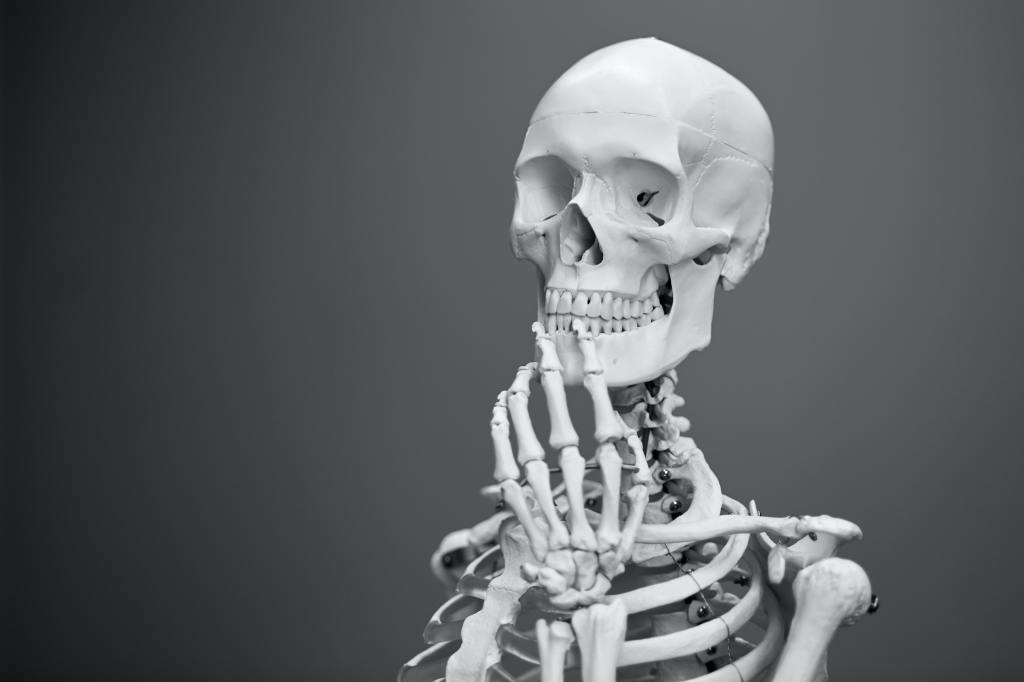
Upon (Further) Reflection

Photo by Lucas Allmann on Pexels.com

Save for the photographs – terrifyingly accurate though they are – that occasionally pop up as my avatar on this site, I suddenly realise that you have never actually seen me and, following on from Monday’s post, that you probably would never choose to do so without the presence of an armed guard and one of those screens that you peer through when attempting to look directly at the Sun.  I may, I fear, have let my insecurities run just a little too free.  I don’t think that I am completely unsightly – although if I’m honest, the way my eyesight is going I could never be sure – people do not scream when they see me (although, if I’m honest, the state my hearing’s in I would never know), they do not cover their children’s eyes.

Now, don’t get me wrong here, I would never claim to be handsome – even my imagination does not stretch that far – but I don’t think that I actually curdle milk.  I would describe myself – charitably, I fear – as ‘normal-looking’.  I’m pretty sure that nobody has ever befriended me for my looks.  People regularly tell me that I look young for my age, but what does that mean?  The Alien that burst through John Hurt’s chest in the film of the same name was newborn, but not exactly a looker.  Looking young is not necessarily a good thing: we all know the story of The Ugly Duckling and we all want to be the swan.  Also, being told that you look young always comes with a little codicil: that you tell the other person that they do too.

I am perfectly happy to be told that I look younger than my years, but I can’t pretend that it is anything over which I have had any control.  I do almost everything possible – according to the internet – to make me look older than my years.  I am the dictionary definition of ‘what the hell?’  My hair is long because I do not get it cut.  My wife says that it has no style, and for that one thing I am grateful.  I have a beard because I cannot be bothered to shave.  I spent all of my younger years scraping the skin off my face, perpetually sore, I’m not doing that anymore.  I will never be a clean shaven hunk.  A bearded punk is more my level.  I fear that W.C. Fields must have smuggled his way into my gene pool in some way that has left me with his nose.  My eyes are fine, if slightly piggy, and my mouth is full – although not quite full enough to hide my teeth.  Pretty normal, all things considered.  I am no oil painting, but I don’t altogether look as though I’ve been through a mincer.

Let’s be honest here, I suspect that there are days when even George Clooney is no George Clooney.  We all have good days and we all have bad days – although the ratios vary.  Everybody would like to be better looking than they are.  I wonder how many people actually look into a mirror and think that they look anything better than ok?  Even Donald Trump must have insecurities*.

Anyway, all I’m trying to say after Monday’s downbeat appraisal, is that I don’t want you to think that I have walked face first into a fan.  Please don’t worry, I am resigned to what leers back at me from the morning mirror.  I am a normal looking bloke (providing you don’t set the bar too high), but realistic.  I will never be James Bond – even a very old one – and my family love me just as I am… providing I keep the pillow case on my head. 

*Stop Press: He doesn’t – and if he did, they’d be somebody else’s.

Upon Reflection

In my bathroom I have a mirror in which – save for the odd ‘morning after’ – I always look ok.  My features, although scattered around my face with almost careless abandon, appear benign and my hair has something that may well, once-upon-a-time, have had something of a style to it – even though it is currently merely clinging onto the wreckage.  It is the mirror that I see as I walk into the room, and the one that I choose to consult before I leave.  It is a perfectly flat sheet of reflective material, as is the mirror on the other bathroom wall, in which I look like a pasty-faced, bloodshot, ancient gimp.  How?  They are made from the same material, possibly bought at the same time, and they are in the same room.  How do they reflect such different aspects?  I have tested them out with other objects – my granddaughter’s doll, my grandfather’s photograph, a carrot – and they all look identical when reflected from the matching surfaces.  It is only my face that takes the hit.

I have given some consideration to why one mirror should see me in such a favourable light, whilst the other is so bent on telling the truth.  I am sure that I have never upset it.  I asked my wife if she had noticed anything similar, but she just asked whether I had been drinking, which I took as a ‘no’.

If I position myself carefully between the two mirrors, I can see the back and side of my head.  It looks relatively normal, but I am not certain.  Is the flattering image produced by mirror one, being distorted by mirror two, or is the frighteningly realistic reflection of mirror one being pimped by mirror two?  Is one cancelling out the eccentricities of the other, or are they partaking in some sort of optical game of Chinese Whispers in which the final image actually bears no resemblance to the initial vista?  Does the back of my head, in short, look anything like I think it does?

I have other mirrors dotted about the house – they regularly startle me in the night – and I am fairly certain of what I actually look like from the front.  If I was an actor, I would play ‘characters’.  This face has not only been ‘lived in’, but has almost certainly suffered a fatal accident.  I have experimented with ‘the toothy grin’, but I just look like the ‘before’ advert for facial reconstruction.  Should I ever cast my visage upon the merciful waves of a dating website, I fear it would wash up on the beaches of ‘desperate’.  Never mind: I have grown used to it.  It is what sits atop my shoulders, teetering upon my oversized neck.  I am far less certain of my rear view.  Other than the untrustworthy opinions of the twin bathroom mirrors, I have only the little reflective square of the barber’s ‘Is that ok for you?’ to guide me, and I have never quite got over the possibility that it could just be a photograph rather than a mirror: ‘this is what you would like the back of your head to look like’.  I have tried turning around in family photographs, but for some reason, that is not considered acceptable, so I will once again abuse my position of power on this platform and inform my many readers that I will be queuing in the post office on Monday, about five o’clock, and I would be very grateful if you could arrange to sneak up behind me and take a photo when I’m not looking.  That should do it.

Otherwise it’s back-to-front on the stool in the railway station photo-booth again.  That always tells the truth…

Moles

John was inordinately proud of his lawn.  It had, as he was all too happy to tell anyone unfortunate enough to be passing by, not a blade out of place.  Not a single daisy, dandelion or clover leaf marred its faultless surface.  It was the flattest lawn in town and it was the greenest lawn in town.  Nobody could deny it.

So, bleak was the midsummer morning when John rose from his bed, opened his curtains and looked down upon his own little patch of immaculately manicured sward to see, placed almost geometrically at its centre, a large, fresh molehill.  He clutched at his chest and uttered an agonised, if tightly suppressed scream.  He almost flew downstairs, his feet barely touching the only slightly less perfect shagpile surface, through the door and out onto his lawn.  “A mole,” he murmured, “a bloody mole.  I’ll have you sunshine,” and he carefully raked over the soil and patted it flat with the back of a spade. 

“It’ll do for now,” he said, but he knew that it wouldn’t.

Later that day he raked a little grass seed into his fussed-over repair and stared in anguish at the temporarily brown blight on his otherwise single-toned sod.  “A trap,” he said.

“This one never fails,” said the man at the hardware store.  “Put it in the tunnel under the mole hill and ‘Kerbam!’ he’ll never bother you again.”
“I’ve flattened the molehill,” said John.  “Reseeded it.”
“It’s no problem,” said the assistant, dropping the box into a brown paper bag, “there’ll be a new one in the morning.  Put it in that one.”
“A new molehill?” gulped John.
“Oh yes, once they’ve started, they seldom stop.”

The next morning John stared down on his lawn, the green plane mutilated by its single raked brown patch and two brand new molehills.  With a sigh, he walked slowly down the stairs into the garden where he carefully buried the mole-trap in the biggest of the two new hills. 

The following morning there had been no Kerbam!, but there had been three new molehills in the middle of the lawn.  Annoyingly they were not even symmetrically placed, but just randomly grouped around the plot.  John was beside himself.
“Why don’t you get Bernard next door to look at them,” said his wife.  “He’s lived here for years.  He’ll know what to do.”
“Bernard’s a perfectly nice bloke,” said John, “but he’s a doctor.  What I need is pest control.”

“Try this poison,” said the pest control man.  “Put it in the newest hole.  It’s guaranteed.”  He didn’t tell John exactly what it was guaranteed to do, but apparently it wasn’t to kill moles.  John’s lawn was no longer his pride and joy, it was his pain and anguish.  It was quickly becoming a total eyesore: more hill than grass.

“You really should ask Bernard,” said John’s wife.
“No,” said John.  “It’s too embarrassing.  I have to work this out for myself.”

And so, day after day, John implemented the new plans he spent the sleepless nights concocting to save his lawn from the rampaging mole: he attached a hose to the tap and flooded the tunnels with water; he attached the hose to his car and flooded them with carbon monoxide; he strode around between the hills thrusting his garden fork deep into the earth anywhere he believed the tunnels might run; he pee’d into the holes under the cover of dark, not in anticipation of any result, but merely to make himself feel better.  He tried a million ways in vain to find a solution, whilst all his wife would say was, “Talk to Bernard.”
“I can’t talk to Bernard,” he sighed.  “It’s personal now.  I saw it last night.  It popped its head out from its hill.  It was weird, furtive,” he continued.  “I’m sure it looked at me in a funny way.”

And finally, having given up completely on the sleep his body so craved, John found himself, shotgun in hand, staring at his ravaged lawn in the blue glare of a midnight full moon.  “Just pop your furry little head out tonight,” he muttered “and I’ll blow it right off your fluffy little body.” 

And then it did.  Just at his feet the soil broiled and bubbled through the grass.  A mound appeared and through it popped the head and body of the cursed mole.  John froze as it stood, rising up to its entire six inch height and, never taking its eyes from his, raised its own, perfectly miniaturised shotgun and, with a theatrical wink, pulled the trigger…

“The moral of this story is very clear,” said the coroner some days later at John’s inquest.  “Embarrassment can be fatal.  Always get a doctor to examine any suspicious looking moles.”

Mortality

Death awaits us all.  It looms over the horizon like a giant shopping centre in the middle of a tropical oasis.  Nobody wants to go to it, but in the end we all do.  The only consolation is that when we come out, we will not have to spend three hours searching for the car… because we are not coming out.  It doesn’t matter where you left it, because it is being picked up by somebody else.  They can worry about who’s pulled your windscreen wipers off.  They can try to contact the man with the key to the wheel clamp at 3 am.  Despite what Benjamin Franklin would have us believe, death is life’s only certainty – except, of course, for a pimple on your wedding day.  It feels morbid to even talk about it, but it is the one thing that we all have in common.  If anyone has ever managed to avoid it, they have remained remarkably quiet about it.  As far as I know, everybody that has ever claimed to have found the secret to eternal life, has died.

It is one of the many things that life forces you to face as you get older, and it is one of the few things that you most certainly will, one day, do.  Mostly the ageing brain is all too quick to point out the things that you will not do: climb Everest (or, indeed, anything above two storeys unless it has a stairlift); run a four-minute mile (there are four wasted words in that last phrase – can you spot them?); look good in fashionable clothes (in fact, any clothes); successfully expand any part of your body that is not your belly; spend a drunken night out with Sandra Bullock; understand the instruction booklet for anything you have bought ever again.

Immortality, on the face of it, has much going for it, but is it really quite so peachy as it seems?*  The Ancient Greek Gods seldom seemed to come out of it very well.  As far as I can see, there are two possible variations to the eternal life scenario:

  1. You are immortal, but nobody else is.  This, I can imagine could become very, very tiresome indeed.  Just consider having to make new friends over and over again until the end of time – at which point, of course, it really will not matter at all if they’ve still got your original vinyl copy of Sergeant Pepper.  Imagine having an infinite cycle of partners, all of whom get old and die whilst you remain young.  Imagine having to tell people that you don’t take milk in your coffee for eternity.  Imagine not knowing what lies beyond death’s door for everybody else whilst knowing with a certainty that you alone will never find out.
  2. Everybody is immortal.  Which means that you are stuck with that tit from number 37 for the rest of time.

If I’m honest, I’m really not certain that I could face eternity – and I have spent forty-eight hours in a Spanish Hospital ward with only dubbed Eastenders and regular suppositories for company.  In the end mortality is what we have – and the knowledge, at least, that as far as we’re concerned, when we die, everything stops.

*For anyone in doubt over this, I can heartily recommend that you give a listen to David Bowie’s ‘The Supermen’ from the album ‘The Man Who Sold the World’.

‘You live and learn.  Then you die and forget it all.’ – Noel Coward.

What I Do (Mostly When I Don’t)

My life is full of moments when I ‘do’ and moments when I ‘do not’.  When I ‘do’, whatever I do, I do it as well as I can (mostly not very) and give it all the concentration I can muster.  It doesn’t come easy to me, concentration: it’s an elusive beast and it slips through my, oh, what do you call them?  Fingers, of course, and I… now, where was I? 

When I ‘don’t’, whatever it is that I don’t, I write.  It is what I do when my mind is otherwise unoccupied.  It is what I do whenever I am not doing something else.

Life is cram-packed with ‘something elses’, they should outweigh writing many, many times over, but they don’t.  Writing is, for me, an every day (everyday?) pastime.  Other things eg buying new shoes, getting my hair cut, making perfect sense, squelching bare-foot through mud, do not happen anything like so regularly.  (Although having written it down, I will definitely attempt to make the latter a more regular feature of my life.)  Writing time is when my mind is at its most lively, but it is also its own ‘down time’ and even I am at a loss to explain it.

Back in the day, when it all seemed to matter a lot more, I would approach an evening at the typewriter with a sense of foreboding.  I had to get something down on paper, but I had no idea what (nor indeed, who, why or when).  I would sit and I would fret (on occasions I would fret and sit, just for a change) and I would write a first line over and over and over until, eventually, my mind began to lose both patience and interest and, quite suddenly, I would find myself with more lines in my head than I could fit on a page and my main issue was editing all of the ‘rabbit’ down to a reasonable length, ensuring that, hopefully, the punchline arrived before untimely death.  Everything hit the page in such a hurry that deciphering a first draft often required the services of either a Rosetta Stone scholar or a precocious three year old. 

When I wrote with my dear chum, the inestimable Mr Underfelt, we would get together just one night each week and spend the entire evening yelling ever more ludicrous jokes and situations at one another before retreating to our separate abodes where we each attempted to make some sense of it.  We each did, but it was seldom the same sense.  Next-week read-throughs – no internet back then – were an hilarious joy.  It is much more fun to laugh other people’s jokes – especially when they are funnier than your own.  (Fortunately I had the neatest handwriting, so I got to slip some of mine in when no-one was looking.)  This was when I learned that it is only possible to write well when you write lots.

Now, of course, I seldom worry over what I am going to write about because, as I am sure you are aware, most of the time I write about precisely nothing.  I sit at the laptop every evening with an empty mind when the day’s doings are over and I write about whatever is enjoying the space up there.  It’s when I do what I do, and I do it whenever the doing is done.

It’s what I do.

Slippers

Photo by Lisa Fotios on Pexels.com

I can’t find my slippers.  I know that I had them yesterday.  I always wear them in the evening.  They are perpetually conjoined with my slouching, night-time feet.  So, where have they gone?  I have to be honest, I thought that if I sniffed hard enough I might find them: a lifetime coupled with my naked pods – a lifetime for them, obviously, not for me, even I don’t keep footwear that long – has left them a little funky.  If I had a dog, I’m pretty sure it would be very attached to them, but I don’t.  I have flies, but they are too busy with the kitchen window to bother about slippers.  I’m not sure what’s on the glass that is more seductive to a fly than the scent of my feet, but whatever it is, I’m going to clean it off right away…

…I’m back.  The windows are sparkling, but the flies remain.  I hoped that once I’d cleaned the glass, they might schlep off in search of a tasty slipper, but they have not.  Clearly I cannot put my faith in flies.  Anyway, as I’d got the gear out, I thought that I might as well clean the rest of the windows as well.  I thought it would take my mind off my errant mules.  (Although the notion has just flashed across my mind that my wife might deliberately have hidden the slippers, knowing that it might lead to a pan-residence window-cleaning session, but I finally dismissed the idea when I realised that the missing-slipper scenario normally leads only to a brisk session of cushion lifting.  She could not have known.  Could she?)  What it actually took my mind off to was ‘A Fistful of Dollars’ and Clint’s ‘riled up mule’, and further onto the question of ‘what, exactly, is a mule?’* followed by ‘so why are shoes without backs also called mules?’ and thus back to my slippers and the mysterious disappearance thereof.

Now this is a house within which things do, quite routinely, go missing – mobile phones, keys, TV remotes, snatches of conversation, ‘don’t forget’ instructions – but by and large they turn up again, albeit, at times, accompanied by considerable acrimony.  I have now searched everywhere that my slippers might, logically, turn up and I am now preparing to investigate the places where they might just turn up in an illogical universe: the fridge, the oven, the washing machine, the cupboard that houses all of the VHS tapes, the DVD’s, various optical leads, instruction booklets and – so that’s where it got to – the base to the old kettle.  The slippers will, sooner or later, turn up, possibly with secretly bred offspring.  (Have you ever considered that there might be male and female slippers?)  If not, I will have to buy new ones to lose.  Let’s face it, nobody enjoys a new slipper.  Nobody feels fully at home in an unsoiled moccasin.  Slippers only become the thing to wear when they are worn: it is not until they become disreputable that they become desirable.

I’ll go and check the bin…

*It is, apparently, the offspring of a male donkey and a female horse.  The offspring of a female donkey and a male horse is a hinny.  I would not recommend trying to put either of them on your foot.

Me, Myself, I…

In reality I am physically unaltered: exactly in the form that nature, in all its bloody-mindedness, intended me to be, but in my imagination I have pimped myself so much, that I am no longer certain which parts of me were factory fitted.  I have tried to improve myself so often that I have no idea what is the original me.  I try to become what I think I should become, but somehow I always remain the same old model with just a slightly increased capacity for uncertainty and more doubt than a born-again agnostic at a Mormon wedding.  If I were to write a new life for myself it would not be the life that I have now, but it would feature exactly the same people, in exactly the same relationships.  I would never want to change most of those around me – changing socks stresses me out – and those I do want to change are not the kind to listen.  The only thing to be truly different, I suppose, in this alter-life of mine would be me.  The circumstances in which my unaltered phalanx of friends and family would exist would be changed only because I would be different: altogether more successful; less willing to do exactly the wrong thing at precisely the wrong time; less likely to take a course of action that a more rational mind might conclude could almost have been designed to make things worse; less likely to find myself standing, emotionally naked in the midst of all of those I hold most dear, with nothing but a sense of indignation and the kind of rash that you only ever get when you’ve run out of cream.

The alternative me would, by the by, be somewhat more wealthy than the actual me.  Not that wealth necessarily equates to happiness but, let’s be honest, we all assume that it does limit anxiety.  The worry of working out how to hang on to what you’ve got, must surely be somewhat less pressing than the worry of how to get it when you don’t have it, particularly when there’s somebody very large and very ugly on the other side of the door waiting to take it off you.  Money is not the root of all evil, but it does provide a very convenient route to it.  If I had it, I would use it wisely, for the benefit of myself, my family and the wider community.  And to buy chocolate.

This wealth, of course, would come to me not by good fortune, but entirely through my own efforts.  My demi-century-worth of assorted scribbling would not have been consigned, largely unread, to a locked desk drawer (actually several large tea chests in the attic and more Flash Drives than you can shake a memory stick at) but would have been read, accepted, produced, published etc etc.  My alternative self, it goes without saying, is infinitely more talented than I, has more teeth and a sense of humour that women swoon over – as opposed to breath that has the same effect.

Obviously alternative me, as written by me, would be everything that actual me wishes to be, but with the kind of good-humoured, charitable soul to which I dare not aspire… and, if I’m completely honest, I’m beginning to resent him already.  In truth, I have an uneasy feeling that however carefully I attempt to re-write this new man he will end up being uncomfortably like the old me, so I’ll probably leave him where he is and attempt, instead, to make the best of me.  It’s a dirty job, but somebody’s got to do it…

Why?

Anyone with ready access to a four-year old child will tell you that the most difficult of all questions is “Why?”
“Grandad*, why do I see the fireworks before I hear them?”
“Well, at 299,792 kilometres per second, light travels much faster than sound and so reaches you much sooner.”
“Why?” 
It is that follow-up ‘Why?’ that kills you.
And if you try to find a way to bluff it through: “Well, something has to be the fastest thing of all doesn’t it?” you will face another “Why?”
“Well, if I’m honest, I don’t really know.”
“Why?”
It’s just a mercy that God did not have a four-year old bouncing around his ankles when he was creating the Earth.  “Behold, I will now separate the land from the sea.”
“Why?”
“Well, I need somewhere dry to build the garden.”
“Why?”
“Well, this human thing I’ve created lives on the land, but drowns in the water.”
“Why?”
I think it would not be too long before God started to question his claim to be all-knowing.  It is almost certain that four-year olds are here simply to ensure that the rest of us don’t get cocky.  There are certain fundamentals that are not to be questioned, but nobody fools the average toddler and it is seriously frowned upon to fall back upon the, “It just is, that’s why” option too early.

When you are four, you need to know everything, you need to understand everything.  It takes many years experience before you learn that you know nothing and understand even less. Such things as you do need to know are less global in scale, but no less essential to existence.  Why is coffee never quite hot enough, until you spill it in your crotch?  Why do you never get lost unless you are absolutely certain of where you are heading?  Why is everything exactly the right size, until you have to fit it?

Some things are, inevitably, more age specific.  Why, for instance, can I no longer leave my car square in a parking space at the first attempt?  Why did anyone ever think that button flies were a good idea?  Why would anyone, even for the fleetingliest of seconds, ever think that wearing a toupee is preferable to going bald?  I no longer worry about why things work as they do, but only about when they will cease to do so properly.

The four-year old brain will never accept that there are things that it will never know, that there are some things that it is best to never know.  It doesn’t know the answer and it wants to know why it doesn’t know the answer.  And to the four year old that is in possession of the brain, grandad is almost certainly the very oldest thing they know and, therefore, should know everything – claiming to be terminally stupid will just not wash (I know, I’ve tried it) – and if you don’t know the answers, they will most definitely want to know why.

*Family spelling and I don’t care what spellcheck says, I’m not changing it!

A Little Fiction – The Case (Dinah and Shaw part 11)

Photo by Janko Ferlic on Pexels.com

It was with no little surprise, knowing how infrequently Shaw changed his clothes, that Dinah contemplated his suitcase as he attempted, not entirely successfully, to extricate it from the boot of the taxi.  “‘Just pack for the weekend’, you said.  ‘You won’t need much.  It’s nothing special.’”
“The last time we stayed in a hotel, you complained that I had everything in a plastic carrier bag,” he moaned.  “So, I thought I’d make an effort.”
The effort, as far as Dinah could tell, involved going to a carboot sale and buying the tattiest cardboard suitcase he could find.  Once brown faux leather and now peeling paper, the giant post-war trunk was a symphony in duck tape and string.  ‘If I were underwear,’ thought Dinah, with a shudder, ‘I would definitely take my chances in the carrier bag.’
“I didn’t want anything that looked new.” 
“Evidently.” 
“I thought it might arouse suspicion.” 
“Presumably in a way that a mouldering, bungalow-sized cardboard valise would not.  Anyway, yes, it’s very you,” said Dinah, somewhat taken aback when, rather than being affronted by her open sarcasm, he smiled brightly at the perceived compliment.
“I think it may have been to exotic places,” he said excitedly.  “It’s got a really interesting smell to it.”
“You could be right,” said Dinah.  “It does smell like something very exotic may have died in it….  A long time ago.”

Shaw lugged the festering behemoth up the marbled steps to the hotel under the watchful gaze of the concierge who didn’t mind wearing the stupid braided uniform, but most certainly was not paid nearly enough to tempt him to carry that particular crate.  Shaw held the oversized container like a mime artist struggling with something immensely heavy, although Dinah couldn’t help but wonder whether in reality, it might not be empty.  It certainly didn’t have his toothbrush in it.  That was in his top pocket with something that looked as though it might once have been a comb, and a teaspoon. 

As his passage through the revolving door to the hotel lobby involved standing the giant suitcase on its end and wedging himself behind it, his eventual entrance was the stuff of ‘Carry On’: the suitcase completing an additional three hundred and sixty degrees whilst a stationary Shaw clung grimly to the now disassociated handle.  In the subsequent melee the concierge received a really quite nasty bruise to the eye (which may, or may not, have been attributable to a flailing Shaw elbow) and an unsuspecting passer-by found herself corralled and herded into the hotel with one shoe in her handbag and somebody else’s dog on the end of an extending lead. Dinah walked calmly to the reception desk.  She and Shaw were booked in separately and occupying different rooms, Shaw had insisted on it.  It was, he assured her, crucial to the investigation that they were not seen to be together.  Why this might be, she had no idea and he was not about to say.  As usual, although unwittingly, Shaw had kept her completely in the dark about what was going on but, when pressed, had assured her that this was a proper enquiry and, more to the point, they were being paid to conduct it.  She would find out soon enough and, in the meantime, she intended to enjoy the peace and avail herself of the hotel toiletries, the bath, the hot water and the mini-bar – although not necessarily in that order – luxuriating in the knowledge that the office rent was about to be paid and that she, herself, might just be able to afford a new bra, or at least some new wires to put in the old one. 

The receptionist handed over the room key with what Dinah perceived was almost certainly a raised eyebrow.  “Would you like help with your luggage?” she asked.
“No thank you,” Dinah replied, suddenly conscious of The Minions rucksack on her back.  “I’ll manage.”

She had barely lowered herself into the foaming water when she heard the knock on the door.  She had no doubt who it was.  Nobody else knocked quite like Shaw.  “It’s on the latch,” she shouted.  “I’m in the bath.  You did say the client was paying for the mini-bar didn’t you?”
“Well, yes, I…” Sheepishly Shaw peered around the bathroom door.  “I… that is… they brought my suitcase up to my room for me – it took two of them – and now they… I don’t suppose you’ve got any change have you?”
“In my purse,” she said, fully aware that Shaw would give the porters the ten pound note that she had heretofore kept successfully secreted.  “It will cost you both the gin and the Jack Daniels from your fridge.”  Dinah heard the door click behind him as Shaw left and settled back into the bubbles, closing her eyes only for a second before she once again recognised Shaw’s impatient knock on the door.  “I told you, it’s on the latch,” she shouted.
“I took it off when I left,” Shaw shouted back.
“Why?”
“Well, you know, you’re in the bath and…”
“And?”
“Well, your purse is on the table.”
“Does it have anything left in it?”
“…I’ve brought the booze.”
Dinah raised herself from the warm embrace of soapy water and into the slightly prickly grip of an over-washed white hotel bath robe before opening the door to Shaw who breezed past her and into the room.  He began to empty his pockets onto the table.  “Gin, Jack Daniels, chocolate, peanuts and Pringles,” he beamed.  “Which would you like?”
Dinah pouted.  Or tried to.  Her robe fell open and Shaw almost broke his neck trying to look the other way whilst she pulled it back together.  It’s difficult to pout and giggle at the same time.  “You got me out of the bath,” she said.  “You can have the tin of lager out of the fridge… and the Smarties as long as you promise not to eat the blue ones… and then you can help me get the lids off these piddling little bottles and tell me what’s going on.”
“What do you mean?”
“I mean, why are we in this hotel?  Why are we in separate rooms when one is so much cheaper and you’re perfectly happy to sleep in the bath with a cushion, and who is paying for the mini-bar?”
“The client.”
“You said that.  So why are we here?”
“Ah…”
“Ah?”
“Well I don’t actually know yet.  It was all done over the phone.  The woman just asked if we would be prepared to take on a case that would keep us both out of the office for two days and, of course, I said yes because I thought you could do with the break and the office is so cold since they cut the electricity off.  I asked if we could have separate rooms and she said we could have whatever we liked as long as we weren’t at the office.  She said we should book into this hotel and just give her the bill when we’d finished.  She said she’d let us know what we had to do once we’d settled in…”
“Did you get a name?”
“Well no, I…”
“So, how do we give her the bill?”
“Well, she’ll be in touch won’t she?  To tell us what we need to do.”  In contrast to Dinah, Shaw knew exactly how to pout.
“Tell me, this woman, did she sound just a teensy bit like our landlady?”
“Well, now that you mention it, her voice was a little bit familiar… Shall I go and get my suitcase?”
“I think we’ll be quicker without it.  Come on, we need to find a back way out… and don’t forget the gin”

I know, I know, not what you’d really call truncated, but these two just don’t work in shorter doses…

Dinah and Shaw appear periodically through my ‘back catalogue’. Should you wish to follow their story you can do so here:

Episode 1. Excerpt from Another Unfinished Novel (Dinah and Shaw part 1)
Episode 2. Return to ‘Another Unfinished Novel’ (Dinah and Shaw part 2)
Episode 3. Another Return (Dinah and Shaw part 3)
Episode 4. Morning is Broken (Dinah and Shaw part 4)
Episode 5. Train of Thought (Dinah and Shaw part 5)
Episode 6. The Morning After… (Dinah and Shaw part 6)
Episode 7. Green Ink on the Back of a Pizza Delivery Receipt – (Dinah and Shaw part 7)
Episode 8. Searching for the Spirit of Christmas (Dinah and Shaw part 8)
Episode 9. The Writer’s Circle #31 – Dinah and Shaw (part 9 – Slight Return)
Episode 10. An Item (Dinah and Shaw part 10)

So, Should I Remain Truncated?

I am by nature a bit of a windbag; a short, fat sockful of inconsequential whining.  It is my sole gift and I giveth of it freely.  And that, as you will be fully aware, is my downfall.  At least I think so.  I have been told many times and by many people – some more politely than others – that I do bang on a bit, and so, of late, I have been trying to bang on a bit less.  I have tried to reduce the word count in my average blog by something around 50% (a bargain in anybody’s books) and it is now time to take stock.  I earned a crust (or more accurately augmented my topping) for many years by contributing a pithy one thousand words a pop to any magazine that would pay me (for my younger readers, these ‘magazines’ were numerous sheets of paper, containing prose and pictures, lovingly stapled together, folded in the middle and sold through the newsagents that used to be where the takeaway now is) and it became a rut into which my brain happily fell.  I have many different ways of writing these little nosegays, but whichever way I choose to approach them, they always resolve themselves after the allotted one thousand words (+/- 10% for good behaviour) which is, by all accounts, far too long for a blog post.  It’s a peculiar thing.  Being very old I write in longhand before typing onto the laptop, I then print a hard copy which I proofread and correct in various hues of felt pen, before editing on the laptop and posting.  I read through the printed article many times before I post it and it always appears to be much shorter on paper than on the screen.  It is the transition onto LCD – or whatever it is that forms the images on my laptop, tablet and phone (phlogiston for all I know) – that makes them too long and, quite obviously, nothing to do with me.  My inability to use one word when twenty will do is not to blame.

In general I find humour in drifting off-piste – something which, in my current abridged form, I may be unable to do quite so often without falling off the edge – and if I’m honest I have no idea of whether the shorter pieces work at all.  I am fully aware (I would like to give thanks to my wife and children etc etc) that where I am concerned, less is definitely better, and writing these curtailed pieces is certainly less taxing.  A single idea is easier to follow and the knowledge that wherever I may get lost, the end really is just around the corner is a comfort.  If I’ve lost anything in this process, it could be that it is something I should have lost years ago.  I’m keen to know what you think, is 500/600 words a better target for me?  Maybe you think zero would be more appropriate.  I must be honest, if you tell me that I should pack it all in, I will probably ignore you.

After all, what is the point in being choc-full of hot air if you can’t share it with the world?