We had a joke at school that went “What’s the difference between a duck? One leg’s the same as the other.” The joke being, of course, that there wasn’t one. The joy was purely for the teller, to be found in the puzzled look of total incomprehension in the eyes of the ‘audience’. We would tell it over and over, often to the same people – all part of the ‘fun’. It has stuck with me all my life and I think about it whenever I write something that is just not funny – so quite often. There is something altogether more reassuring about thinking, “That’s exactly the way it is meant to be: the joke is on you,” than “What I have just written is utter shite.” I am guessing that we all know someone – it may even be you – who revels in telling the same joke again and again, knowing that everyone will laugh because… well, because nobody wants to be an impolite tosser do they? Who’s going to be the man that says “You told us that joke last week – and it wasn’t funny then”? Habitual joke re-tellers tend to be the life and soul: they have lots of friends. They might be big.
Besides, we all do it from time to time don’t we? Everyone repeats jokes, it’s just a question of remembering your audience. The great Billy Connolly once did consecutive shows without repeating a single joke. Such talent is rare (unique, I would argue). Most comedians repeat material night after night – the jokes remain the same whilst the audience changes.
Jokes can be nuanced: fashioned by surroundings and circumstance, and such light and shade is not necessarily appreciated by the audience. As a youth I often drank in Working Mens’ Clubs and I am pretty sure that a Friday evening comic might have been told exactly where he could stick his nuance. Thankfully the days of jokes that need a target have largely gone: men can still gently snipe at women, women at men, and everyone at politicians, but stray into misogyny or racism and you, quite rightly, will get the reaction you deserve. (If you do get laughs, you almost certainly have mistakenly wandered into a Reform UK meeting.)
Anyway, nobody tells jokes any more, do they? The days of “A man walked into a bar…” are long gone, as are the Englishman, Scotsman and Irish man jokes as, since Brexit, nobody is particularly keen on spending time in the company of the Englishman. Jokes that do need a target will only work when the teller is, himself, the target. Self-flagellation pretty much guarantees laughter. If you have a particular peccadillo, of which most of the audience is aware, so much the better. Making a fool of yourself is always an acceptable way to get laughs, as long as you haven’t done it all in front of the same people before – and if you have, well, you can always become a politician… or a duck.
I’m not good-looking, I’m not too smart I may be foolish but I’ve got a heart… Don’t Laugh at Me (‘Cause I’m a Fool) – Norman Wisdom (Seskin/Shamblin)
N.B. If you have read right through this week, then thank you. I do realise that this week’s posts have not exactly been my usual fare (although I do also accept the possibility that is exactly why you’ve read them right through.) If you have enjoyed them, don’t worry, I’m sure there will be more to follow in time. If you haven’t liked them, don’t worry, it will never happen again… Next week I hope to return to something a bit more like normal and the week after… well it’s long way away isn’t it…
…Outside of Bruce Forsyth and Jimmy Tarbuck on Sunday Night at the London Palladium there was little in the way of stand-up comedy for we pre-teens in the late sixties and early seventies. TV is what we had and, by and large, that meant old films…
…My first great comedy love was Groucho Marx: I would watch late-night Marx Brothers films on TV long after what should have been my bedtime – always after Match of the Day and The Odd Couple, long after my parents had departed for the night. My earliest memory of laughing until I cried was at ‘Lydia the Tattooed Lady’ (At the Circus). Groucho was inherently funny, although, unlike most of the comedians mentioned in part one of this piece, he relied heavily on script, particularly for the snappy one-liners for which he became so famous. Without doubt in my mind, the king of the one-liner was Bob Monkhouse, a comedian who would, himself, never claim to be intrinsically funny, but who had the quickest mind of any I have ever seen. A great joke writer and the writer of one of the greatest ever one-liners: “People laughed when I told them I was going to become a comedian – well, they’re not laughing now…” – a great comedian, but definitely no clown. Taking up the baton from Groucho, my next great film love was the giant talent of Mel Brooks, most particularly in the films he made with Gene Wilder*. The Producers, A Silent Movie, Young Frankenstein, Blazing Saddles, these were films that reduced me to a blubbering wreck. Mr Brooks was decidedly (and wilfully) non-PC even back then – Lord knows what the censors would make of any of his films now. I don’t suppose a single one of them could be made today – which is sadly why the world has got itself into the kind of state it is in…
…And I became, as all boys of my age, a complete devotee of Monty Python’s Flying Circus, staying up late to watch the show (Tuesday evening I seem to remember – my parents were never over-authoritarian over ‘bedtime’ and often left me watching TV downstairs long after they retired for the evening, secure in the knowledge that there was bugger-all to watch but the test-card after midnight) memorising entire sketches for repeat performance at school the next day. I started to write ‘comedy’ at a very early age because all I wanted to be was the new member of the MP team. John Cleese was, of course, the figurehead, but never my favourite Python. He is an inspired clown, in the tradition of Charlie Chaplin, who always seemed to me to have to work just a little too hard to make it look like fun. He found his apogee as Basil Fawlty in a truly brilliant and tightly scripted comedy masterpiece (Flowery Twats anyone?) that played to all of his strengths and carefully wrote out all of his weaknesses: his ‘loftiness’ and ‘pomposity’ were played for spectacular comic effect, and his ‘bubbles’ hilariously burst by (I believe) the script contributions of Connie Booth.
In fact I most enjoyed the final series of Python – yes, the one without Cleese – because it played into the hands of my own comic hero, Michael Palin. This series was very much the precursor to Ripping Yarns, the best (in my ‘umble opinion) of all post-Python endeavours. Palin is simply funny and he has the humility and approachability that is conspicuously absent (in the public persona, at least) of Mr Cleese. Eric Idle (the George Harrison of the Pythons) shone brightly in Rutland Weekend Television and via The Ruttles became king of the comic song – so heavily featured in the most recent Python reunion (2014? Surely not…) – and crucial to film and stage endeavours. As for Graham Chapman, delightfully (and drunkenly) bonkers, sadly we will never know what more was to come from him…
Behind the closed door of my bedroom, the only TV being downstairs, a huge part of my comedy upbringing was via the long-lost comedy LP, listened to over and over again until every word, every nuance, was learned by some kind of osmosis – foremost amongst them being Monty Python Live at Drury Lane, Jasper Carrot’s Beat the Carrot, Rabbits On and On and Best Of (purchased solely for the inclusion of the seminal Magic Roundabout) and, of course, the wonderful (and, at that time, otherwise unbroadcastable) Big Yin Cop Yer Whack For This and Raw Meat for the Balcony – proving once again that great comedy could be heard and did not necessarily have to be seen**. I wonder if anybody listens now?
*The one AND ONLY Willy Wonka.
**QV the magnificent Milligan and The Goon Show.
I’m not good-looking, I’m not too smart I may be foolish but I’ve got a heart… Don’t Laugh at Me (‘Cause I’m a Fool) – Norman Wisdom (Seskin/Shamblin)
I had an idea of where I wanted to go, but I was determined that this post should not become just another ‘list’, without realising that it could, instead, become very long indeed (and has thus found itself split into three parts)…
…So, it started with a car-boot purchase of an autobiography by long-retired stand-up comedian (and later film star) Lee Evans (The Life of Lee) and a short passage reminiscing about the comedians he admired as a child, which of course, got me going. There is a certain class of comedians who are ‘just funny’, regardless of script or situation. The undoubted king of this category would, for me, be the late, great Tommy Cooper, a comedian who could, quite literally, have his audience in tears of laughter without saying a word: Eric Morecambe (Morecambe and Wise), Marty Feldman and the greatest of all stand-ups Billy Connolly all had the very same gift of simply being funny. It wasn’t even an anticipation of what they were going to say that got people laughing, it was just them being there. All of them had (or in the case of Sir Billy have) funny bones. It isn’t that you know they are going to be funny that makes you laugh, it is simply that they are funny. A great script is the icing on the cake – but these people are funny anyway. The wonderful Larry Grayson was another comedian who could make me laugh simply by being there. He did nothing more than invite you in to share his life. He didn’t even tell jokes, he just tittle-tattled on. He was simply funny. I would also put the incomparable Dave Allen in this category, although for a minutely different reason: he would make you laugh before he started, but in his case it most certainly was in anticipation of what he was about to say. His humour was never intended to appear spontaneous, but you knew he was going to make you laugh out loud so, what the heck, you might as well start now…
Victoria Wood was very much the same: you were ready to laugh the moment you saw her, because you knew that she was going to be funny. A bona fide comedy genius she played with words in a way that nobody else has ever matched. Her sketches were true comedy gold and in Dinnerladies she gave us an absolute gem of a sit-com, but for me it was always as a stand-up that she truly sparkled. She drew the entire audience in, in such a way that everyone wanted to be part of her life; to laugh with her at the sheer ludicrousness of it all. AND she succeeded where so many failed before her: in making comedy about female subjects accessible as well as wildly funny. Along with my American love, Rita Rudner and, in the UK, Sarah Millican and Sarah Pascoe, she taught men that a) women can be every bit as funny as them and b) men can be every bit as ridiculous as women.
The comedy giant (in Britain) that is Peter Kay has recently returned to his stand-up comedy roots and when he is in full-flow he remains impossible to resist. He has mastered the skill of playing to huge audiences: allowing us all the opportunity to laugh at ourselves and everybody else around us. Michael McIntyre and Romesh Ranganathan at best are capable of the same, but like most modern stand-up comedians they have shone brightly for a while before, at the very first opportunity, finding something else to do. Something that is far less demanding and which, at the same time, exists solely because of past glories.
Stand-up is not dead, it has just become a game show…
I’m not good-looking, I’m not too smart I may be foolish but I’ve got a heart… Don’t Laugh at Me (‘Cause I’m a Fool) – Norman Wisdom (Seskin/Shamblin)
N.B. I make absolutely no apology for including this song amongst the list of classic rock I have used for my titles so far this year. Norman Wisdom films were a staple of my youth and this song sums up his hapless lovelorn screen persona to a tee.
It has occurred to me that most of these great comedians are, in fact, late great comedians and I wonder what that might mean for stand-up comedy in the future. There are many many very good comedians doing the rounds these days, but how many will go on to be great and how many see stand-up as merely a stepping stone to TV gameshow host or Hollywood voice actor remains to be seen. Also, I realise that many of these comedians, Sir Billy outstanding, are probably fairly-well unknown anywhere outside of the UK. Comedy can be very ‘location specific’ and those that brook the geographical laughter barriers are few and far between. Other than the ubiquitous Mr Connolly, we have only really shared Eddie Izzard, Ricky Gervais and Russell Brand with the US of late (and for one of them – at least – I can do nothing but apologise). Germany has given the UK Henning Wehn, the US gave us Reginald D Hunter and Rich Hall. Canada gave us the delightful Kathrine Ryan and the much missed Kelly Monteith (who once made me laugh so much in a theatre that I feared auto-asphyxiation). TV and film comedians find national divides much easier to bridge, for the stand-up the world is made up of very different places. Perhaps this shrinking world of ours will change things. Perhaps we all need to learn to laugh at the same things – or maybe we just need to learn that it is ok to laugh at one another sometimes…
If you have not heard of the comedians I have mentioned here, I can only apologise and urge you to check them out on Youtube…
Yet another day when my spirits had descended to previously unplumbed depths: I was a compromised bathysphere, slowly sinking into the abyss whilst building up the kind of internal pressure that could foretell of nothing other than impeding disaster and a date with the fishes. My mood was black – I would say blacker than black, because ordinary black had become my normal default mood, but my mum always told me that there were no shades of either black or white, so whilst no saintly youth club leader could ever be whiter than white, I could not be blacker than black, just black, very black indeed – and my spirits were lower than the Trustpilot rating of the average Italian politician. I could not have been more down without being out. Except Christmas Day lay just around the corner: the knockout blow; the nightmare scenario for a man whose very best efforts at false bonhomie fell somewhat short of the minimum expected, a man abandoned by the Grinch because of his over-zealous views, a man whose ho-ho-ho had somehow become a strident no-no-no. I am tempted to say that I have always felt the same way about Christmas, but it would involve me in the kind of lying that would redden my cheeks and make my nose itch. This seasonal melancholy was relatively new to me, although I had been engendering it in others for years apparently.
Christmas is no time to be alone. I have no family, whilst the few friends I have, do have family, with whom they chose – treacherous scum – to spend the festive period, so, as usual, Christmas Eve found me alone in the pub observing life through the bottom of a beer glass. I had almost reached the decision to go home early – a plan that was only forestalled by the fact that the kebab shop hadn’t opened yet – when a hand reached out to take my glass. I was about to protest that I hadn’t finished, despite the fact that I patently had, when I noticed the cufflinks and the crisp white cuffs. The landlord was a grand chap, don’t get me wrong, salt of the earth and all that, but not really a cufflink wearer. The kind of people he employed as bar staff were much more likely to have them through ears, nose or nipples than shirt cuffs. Given the state of the table tops, nobody in their right mind would wear a white shirt in there. To be honest, a full forensic overall would be less out of place and definitely more suitable.
“Same again?” said the voice that I knew I was going to recognise even before its owner had spoken. “How do you do that?” I asked, simultaneously nodding an affirmative. The man that I now knew as Lorelei simply smiled and walked to the bar. The landlord left his conversation and served him without a hint of rancour. If I had wanted serving in mid-Brexit rant, I would have been told to hold my horses in no uncertain terms. For Lorelei he was all genial host. But for the fact that he was as bald as a coot, his forelock would have been on the receiving end of a severe tugging. I could not hear the conversation, but whatever my bearded friend had to say, the coot found it exceedingly amusing. He made no attempt to short change him.
I thanked him for my drink and took a long draught from the glass. “I’m surprised that you drink beer,” I said. “I don’t,” he answered, “but the landlord was so happy to serve me, I didn’t have the heart to ask for a dry sherry.” He took a long drink without flinching. “A bit more hoppy than I was expecting,” he said, after pause for reflection, “but quite adequate, all in all, I expect.” “So,” I ventured, trying to sound as cool as I could. “What brings you here on Christmas Eve? Not exactly your local, is it?” “Isn’t it?” He looked shocked and I realised – with a flicker of the surprise I had grown used to in his presence – that I had no idea at all of where he lived. “Well I’ve never seen you in here before.” “No,” he said. “Is this your local?” I was painfully aware that he already knew the answer, but I gave it all the same: “It used to be” a mite more sulkily than I intended. “When I was… you know…” He nodded. “More local?” “We used to come in here a lot, when we were… you know… Before she left me for that…” I wanted to swear, but I felt quite certain that I would feel as though I had let myself down by doing so. Odd, I can normally barely stitch two sentences together without writing out an IOU for the swear box. “…Estate Agent,” I concluded, feeling it a more than adequate signal of my distaste. “Ah,” he said. “Should I have bought peanuts?” “What?” “I was just wondering, I’m quite new to this, Christmas Eve and everything: should I have got snacks with the drinks?” “No,” I said. “No. This is fine. I’ll get some when I go to the bar. You will have another?” “As long as it doesn’t have to be the same,” he said.
We sat for some time in companionable silence. I studied his face as closely as I was able to without seeming… weird. He seemed genuinely happy to be there, smiling, out of place in my mind, but not in his. He did not touch his beer. After what seemed to me to be a suitable pause, I asked him if he would like another drink. He asked for a whisky. “He keeps a nice malt under the counter,” he said. “His little weakness, I think. I’m sure he’d be pleased to share.” I approached the landlord with caution, it always seemed wise, and explained what my friend had suggested. “A gent,” he said pouring an unmeasured tot into a tumbler. “Tell him it’s on the house. Here…” he said, handing me a freshly filled water jug. “He’ll want this.” Unsurprisingly, my pint was not on the house.
Lorelei seemed much more at home cradling his whisky than he had appeared to be with beer, although he did not appear to be convinced by the pork scratchings. “Well,” he said at length, “it’s so nice to be in company, isn’t it?” I had to admit that, even though the conversation between us was sparse at best, I was happy and comfortable in his company. “Sometimes,” he said, “you’ve got to let old things go before you can find new things.” “Sometimes,” I said, “it’s easier said than done.” “Yes,” he agreed, “but it’s a whole lot easier to not even make the effort. Why don’t you like Christmas?” “Well I… I… Why do you say I don’t like Christmas?” “Do you?” “No.” He smiled. “But,” I continued. “I used to.” He swirled his whisky in his glass, peering down into it as though he was looking into a crystal ball. I felt obliged to fill the conversational void. “It’s not the same, is it,” I whined, “when you’re on your own.” “The same?” he sipped his drink with exaggerated pleasure. “The same? No, I suppose not. Nothing is ever the same, but you can find pleasure if you choose to look for it. Perhaps you ought to start looking.” “Where?” “Where? Everywhere. Maybe not through the bottom of that glass – it’s not been cleaned properly in years and the beer… oh dear, the beer – but if you look for joy, you’ll find it. If you’re content with what you find, then friendship will find you.” He drained his glass and began to rise from his chair. I looked at the clock on the bar; 11:30. Where had that time gone? What is it they say about time? Lorelei had waved his goodbyes to the landlord, who looked like a dog who had just been given a Bonio, and had moved towards the door. “Do something tomorrow,” he said. “Don’t wallow. Paddle.” He opened the door and a cold rush of late evening air spilled in. I tried to stand, drain my glass and put my coat on, all at the same time. Two things too many as it turned out. “Do you fancy a kebab?” I asked as he disappeared into the night. “No,” he answered…
First published 12.12.20 under the title “A Little Fiction – Conversations with a Bearded Man (part 5) – A Pre-Christmas Exchange”.
The amazing Hunt Emmerson cartoon that announced Our radio series in The Radio Times – long ago, before Time was born.
I try to write pretty much every day: it is my thing, it is what I do, but I cannot deny that I have always found my greatest joy in writing with other(s) – especially when they laughed at my contributions. When they come up with a line that is better than your own, it simply spurs you on to come up with another yourself. The laughter associated with continually topping one another becomes infectious and addictive. I have reminisced on these pages before about the great joy of writing with my (almost) life-long buddy Chris (Crispin Underfelt) and laughing so much as we repeatedly ‘trumped’ one another’s jokes that we then had to take a few days apart to ‘get something down on paper’. We worked seamlessly because we both knew our strengths: Chris was the ideas man, whilst I just twatted about with the words. Together we came up with a thousand one-liners per hour. I jotted down as many as I could remember and ‘worked them up’. Sometimes Chris would fly off in another direction – anywhere from project B to Z – before project A was finished, other times he would doggedly stick to an idea long after I had given up hope. There were times, of course, when Chris would serve up a flat ‘No’ to lines that I thought were great and, as the person who generally did the typing, I would sneak them back into the script only to have them vetoed again at the next read-through. Similarly I would leave out lines I didn’t like, only to find that Chris’s own notes clearly showed that they were in. It always worked for the best and I don’t recall us ever falling out.
I have a boxful of scripts from that time that I flick through now and again and they always make me smile. Like all such things, it is impossible to revisit that time – we wrote a million sketches for the kind of shows that no longer exist – but that knowledge does not mar the joy of what we did then. Through the radio show – which we were absolutely certain would be our big break – TV sketches and a sadly ill-fated musical using the songs of ‘Hello Cheeky’, we operated as a single being: he was up when I was down, he was full of certainty when I was full of doubt. He always made me laugh and I always had a pen.
Chris is a natural performer and he began to drift in that direction as I plodded along writing a number of ‘close but no cigar’ sit-com pilots whilst continuing to contribute articles to any one of a number of humour magazines (all now gone – not my fault I swear) that would pay me for what I did. I am never happier than when sitting at the computer banging away without a care in the world (or, more often than not, an idea in my head) but I always miss the thrill of showing Chris the labours of my week (will he/won’t he laugh?) listening to his jokes, marvelling at the scope of his ideas, shouting at one another until we are hoarse and sharing the laughter…
Now, in case you are wondering why this piece seems out of place and out of time then, yes, I will admit that I have written it in the hope that Mr Underfelt might read it and be spurred on to give you one or two recollections of his own – of our time writing together, of his early attempts at stand-up, and of his own theatre productions of ‘Bouncers’ and ‘Little Shop of Horrors’ , anything. (There are, by way of explanation, links to numerous previous posts scattered throughout.) Maybe he’ll even tell you of our little trip to Hull to see a play called ‘Moose’ and an ill-advised stop to ask some young ladies on a street corner if they could tell us where to go. They did…
EMERGENCY A sudden, urgent and unexpected occurrence requiring immediate action. Usually the result of a late-night kebab from a take-away that you wouldn’t have gone within thirty feet of without a flame-thrower and an economy-sized spray of industrial-strength DDT when sober.
ENCUMBER To load with debt, to impede, to embarrass. Obviously it is the embarrass bit that is relevant here – particularly if you thought this was a green, phallic salad fruit.
EQUIPMENT Anything kept or provided for a specific purpose. Machine guns, ground-to-air missiles, fast cars, Swiss Army knives etc. may all prove to be beyond your means. Don’t Panic! Equipment does not need to be expensive to be effective. A loaded pea-shooter in the ear can be very disconcerting, particularly in the dark. A tumbler applied to a joining wall can be just as effective as expensive electronic bugs – and you can’t drink out of a bug when you get bored of waiting for something to happen. A certain amount of creativity will be required when gleaning information in this manner, as the conversation you hear will unfailingly be muffled, repetitive and exceedingly boring to all but Alan Bennett. The juice of an onion (readily available at Waitrose I believe) makes perfect invisible ink (although it does make all your correspondence smell of onion) and a house brick is the ideal substitute for expensive skeleton keys.
ESCAPE To get away from confinement or restraint. Technical word for what we practiced subversives call ‘running away’. Escape is the only logical response to all types of danger. Much is made of the Fight or Flight effect of adrenaline, produced by the body’s adrenal glands in response to danger. I suggest you strive to develop a Flight or Fight effect. Learn to respond instantly to your initial instinct. Run. Run every time. That way, if for some unfathomable reason you should decide that you do not want to be seen as a pathetic little coward and you take the decision to fight, you will already be too far away to do anything about it.
ESPERANTO A language invented by Dr Zamenhof (c. 1887) to enable people of all nations to converse together. – Also known as ‘shouting’ in English.
EXCREMENT Ordure, dung. Try not to be around when this stuff flies, sticks or hits the fan. Can be used in a number of subversive ways – none of them terribly pleasant – and none of them I can list here on grounds of taste, decency and the fact that if you subsequently go out and try to execute such an action, I may find myself hauled up before the beak for ‘Putting ideas into the heads of the mentally challenged’ or similar. Remember, if you get caught in the act of using ordure in the course of subversive activities¹, you may well find yourself right up to the neck in it.
Being caught in somebody else’s garden, whilst in possession of poo is something that you are unlikely to be able to pass off as a harmless hobby.
EXPLOSIVE Anything likely to explode eg gunpowder. Let’s face it, as an amateur, you are extremely unlikely to come up against anything more explosive than a prawn vindaloo – actually, I’m not certain that there is anything more explosive than a prawn vindaloo. You could try to feed it to your enemies, but honestly, it’s not the sort of thing you can slip into their muesli without them noticing. A bit like an atomic bomb – it’s the fall-out that causes the real trouble.
EYESORE Something ugly to look at. The world is full of such things, every single one of them man-made. Turning beautiful things into eyesores is an inexpensive and effective subversive ploy: try sticking an imitation wart onto the face of the Mona Lisa¹; build a dirty-great coal-fired power station in the middle of our green and pleasant land; attend an EDL meeting. Please remember that an ‘eyesore’ is not the same as a ‘sore eye’, which is what you will get if you forget yourself at the EDL meeting and reprimand the speaker for using racist language.
I say ‘try’ as the French security guards are unlikely to take kindly to it and you might find yourself nose-down on the floor with a knee in the back of your neck quicker than you can say ‘Zut alors!’ Ultimately, you may wind up in a French prison where you will be forced to share a cell with a large number of blue-chinned men wearing striped pullovers and neckerchiefs, all of them missing wives and girlfriends (plurals are intentional – they are French after all.)
EXERCISE. Translate your subversive Manifesto into Esperanto and see whether anybody either notices or cares.
The problem with self-esteem is that the more it gets chipped away, the more brittle it becomes. The more you are told you are wrong, the easier it becomes to believe it. The more often you are persuaded that your opinions have no value, the less often you voice them. The less that you voice your opinions, the more they are treated with contempt. It is not a question of feeling worthless, just that you are not part of the equation: that the world is perfectly happy to get along without your input…
If I’m honest, I’ve never really brought much to the party: a carefully chosen bottle of wine that only the most desperate would drink, a plate of mushroom vol-au-vents* and five minutes warm-up for the main event. I do have a gift for making everybody else feel a little better about themselves – but only because they are not me. In company I cover up by turning off my brain and switching my mouth into overdrive. I take no responsibility for what comes out of the bloody thing. You should have known better than to have brought me here…
I imagine that everybody needs some form of emotional crutch from time to time: chemical, alcoholic, emotional, chocolate… everyone needs something to lean on and everyone knows someone who is never happier than when they are kicking it away. I wonder what their crutch is? There is some kind of liberation in being freed from the responsibility of participation by the knowledge that your opinion is not worth serious consideration, that generally it can be dismissed without the inconvenience of listening to it.
The Bible says that the meek shall inherit the earth – what it doesn’t say is that it is dependent upon the mighty allowing them to – and we all know they will not. The mighty will inherit the earth, the meek will inherit the task of keeping it going; of accepting the abuse and sticking to the rules. They will not be party to the making of the rules, nor will their participation be welcomed. Rules are not framed by those who must live by them, but by those who consider themselves above them. What is the point in any other opinion, when you are sure you already know best?
It is important (unfortunately) to face facts (something at which I am very bad): if the meek were ever to actually inherit the earth, they would have to hire somebody else to run it. Probably someone not entirely different to the eejits who run it right now. It takes a certain type doesn’t it? Our leaders are one of two varieties: a) career politicians who have always had the conviction that they know best or b) successful businessmen who have discovered that money buys the right to know best. In either case they are unlikely to allow themselves to be ‘ruled’ by the meek for long. We may have been bequeathed the planet, but the lawyers are already picking through the smallprint. We won’t take much persuading that it has all been a big mistake and worthlessness will flood back alongside a vain attempt to retain a little dignity: “The earth? Oh, we gave it back. We never really wanted it anyway.”
In truth, my friends, the meek will inherit bugger all until everyone else has sucked everything good from it, and then we’ll tell ourselves that it is no more than we deserve. It’s what they have told us, and we have to agree…
Suck suck your teenage thumb Toilet trained and dumb (When the power runs out We’ll just hum)… My Iron Lung – Radiohead
*Literally ‘flying in the wind’ – the world’s most disappointing party food, if only because 99% of every one ends up on the carpet.
For my younger readers, an Iron Lung is a now largely defunct machine that breathes for you when you lose the ability to do it yourself…
A nearly full glass, soon to be made half full – or possibly half empty…
I will begin with a very quick note, to apologise for my absence from your ‘reader’ stats and comment boards of late: I could explain but, frankly, it really is not your burden to bear. Things are settling; I will be back soon I hope. Meantime, thank you all for continuing to read my drivel during this absence.
When I was a boy I knew, as all boys did, that everything was going to turn out for the very best. It went without saying that I would make a more-than-comfortable living from writing sit-coms and screenplays. My house would have a swimming pool, a full-size snooker table and one of those chocolate bar dispensing machines that did not need coins. It seemed well within the realms of possibility that I would become famous from appearing in my own films (before, inevitably it seems, deciding that I couldn’t be bothered with all the graft involved and, instead, started appearing in any old shite my agent might offer me as long as the money was right). I was at an age that meant that I couldn’t completely rule out the prospect of becoming tall, handsome and charismatic. Not completely. In my mind I will always struggle to rule out the possibility that all things will end well: however slim, the chance is always there. Optimism, like getting back to your feet after kneeling for five minutes, is so much easier when you are young. The fact that I am neither tall, handsome nor charismatic is down to genetics, and the fact that I am neither rich nor successful is down to… well, whatever it is down to, it is definitely not my fault.
I suppose it only right to admit that I am generally not viewed by those around me as one of life’s optimists. I do believe in the ‘goodness’ of humankind, and I totally believe in the power of ‘good’. I just can’t help feeling that it might have taken its eye of the ball a little bit just now. I refuse to be pessimistic about a future world that will contain my children and my grandchildren – I know that at least a very small part of it will be good – but ‘making a difference’ seems impossibly hard sometimes.
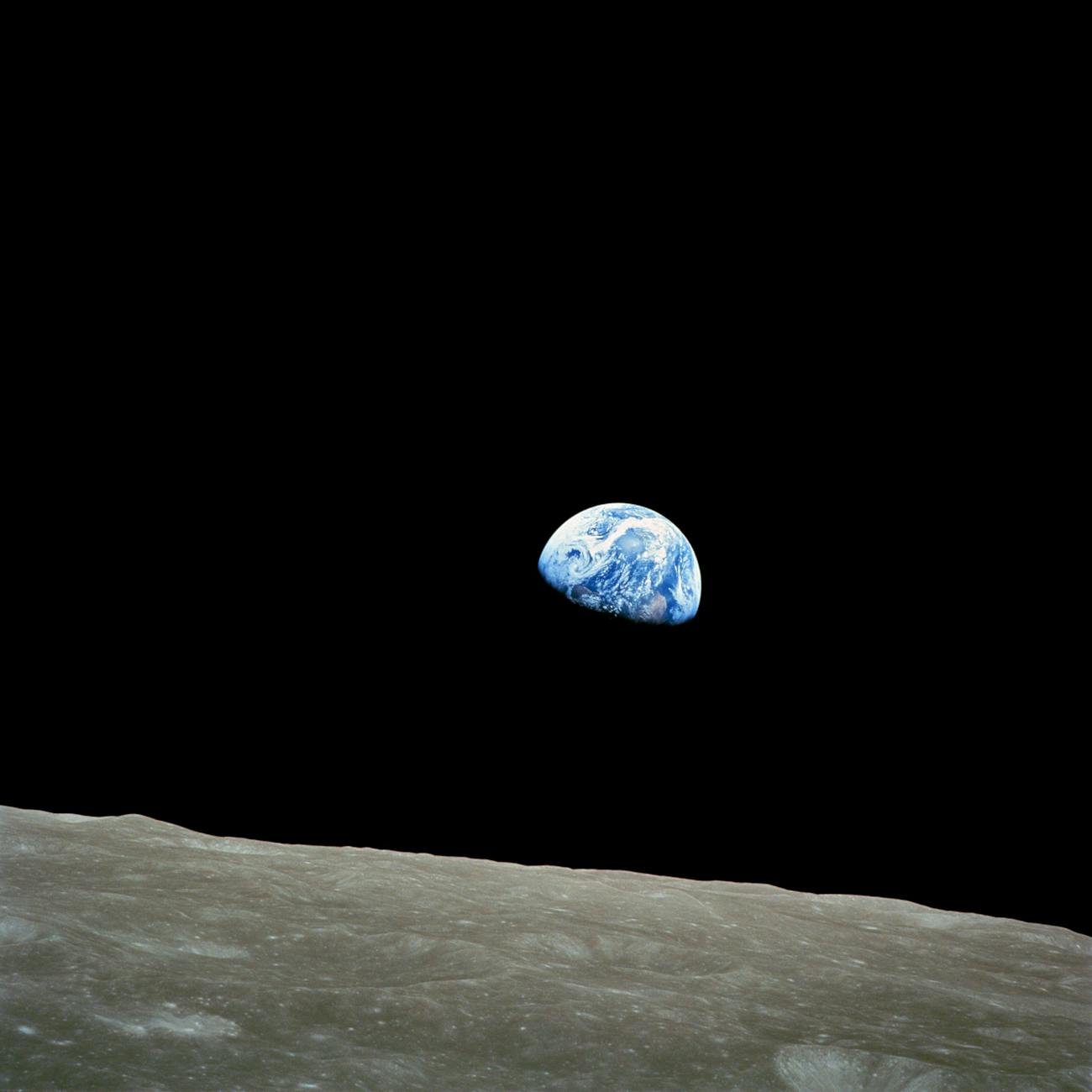
We are all passengers on this beautiful blue careering spacecraft of ours; unfortunately none of us are driving it. Those at the wheel are either drunk on over-the-limit ego, or blinded by the on-coming lights of something much bigger. This is Big Shit: only the vastness of everything can save us (Little Shit, as we all know, is solved by a Cadbury’s Crème Egg) there is so much potential for a near-miss. Or is that wishful thinking?
And if I wish to stop it all And if I wish to comfort the fall It’s just wishful thinking… Wishful Thinking – China Crisis (Daly/Lundon)
…Oh, and the difference between optimism and wishful thinking? Well, whilst optimism separates the ‘glass half full peoplefrom the ‘glass half empty’s, wishful thinking supposes that there is just the faintest of possibilities that the glass could, just conceivably, be completely full. (The realist, incidentally, recognises that should that ever prove to be the case, it would inevitably get knocked over onto the crotch of your white trousers.) If I’m honest, I seldom expect the best to happen, although I do always hope for better and if it still looks bad, I stock up on bottled water, close my eyes and think positive thoughts…
… I’ll get over you, I know I will I’ll pretend my ship’s not sinking And I’ll tell myself I’m over you ‘Cause I’m the king of wishful thinking… King of Wishful Thinking – Go West (Page/Cox/Drummie)
…And that was the fourth time I met him. He was sitting cross-legged on the bonnet of a car that I did not recognise. It was parked at a slight angle, roughly adjacent to the curb, thirty metres from a very busy junction. Traffic backed up behind him, but strangely nobody took to their horn. They queued, silently and filtered by as the approaching traffic allowed. Many wound down their windows for a better look; some smiled, others waved. He seemed to be listening to music. His head was tipped back slightly, his eyes were closed and I thought I would be able to slip by un-noticed. I had very quickly grown accustomed to not thinking about my life; I was happy to just drift along on its current. I didn’t want my eyes opening, so I kept them down and hummed to the music in my head.
He was speaking to me. I could sense his voice rather than hear it, but I couldn’t ignore it. I removed just one headphone, as if only half-hearing him would allow me to retain some degree of disassociation, and looked towards him. “Lorelei,” he said. “Great track. I heard you coming.” “You can’t have done,” I said, as if it made any difference. I was certain I had expunged all Wishbone Ash from my ancient i-pod, although to be honest, it always had a mind of its own, but I had somehow been totally oblivious to what I was listening to until he spoke. “Don’t suppose you’ve got my petrol can with you,” he said. “You’ve run out of fuel?” “I guess so. The little hand is pointing towards ‘E’.” “Well, as you can see, I don’t happen to have your can with me now…” I was aware that I was sounding like a precocious child. Mentally I slapped my own face and reminded myself not to be such an arse. It didn’t usually work, but it was worth a try. “You’re right outside a petrol station,” I said. “We can get some there. They’ll lend us a can I bet.” He jumped down from the bonnet and together we walked towards the petrol station kiosk. It was then that a thought struck me. “It is your car, I suppose…” “What?” He looked at me as if reflecting on a question he had never been asked to consider before. “The car,” I looked over my shoulder. “The car you were sitting on. Over there. You said you had run out of petrol. It is yours I presume, the car?” “Of course.” He looked hurt. I relaxed. “Well…” I tensed again. “In as much as anything can be said to truly belong to anyone.” I turned to look directly at him. “Do you actually own it?” I said. “Is it yours?” “Yes,” he said. “Almost certainly.” “Almost certainly?” “To all intents and purposes.” “Look, before we go in there – it is surrounded by CCTV cameras by the way – and ask to borrow a petrol can in order to buy some petrol and put it into that car, I need to know that it is yours to drive.” “Why would I buy petrol for a car that isn’t mine?” “Is it yours?” “No.” I started to walk away. “But it’s mine to drive. I have all the paperwork, insurance, all that kind of thing. Would you like to see it?” “Is it yours?” He stroked his beard with his hand, ruffled his hair a little, pulled on a twisted cuff. “If I say yes?” “I would ask to see the papers.” “Ah, I have those.” I turned to walk back towards the car. “But I don’t have them with me.” “What’s going on?” I asked. “Is this some kind of set-up? Am I going to be arrested as an accessory? Is the car full of drugs or something? Just tell me whether it’s yours to drive… legally.” “Legally?” “Legally.” “Legally it is mine to drive. I have a licence, I have paperwork, I have insurance, I have keys.” He showed me the keys. “I have run out of petrol – you know what that’s like – but I don’t have a friend with a petrol can.” Shamefaced I pushed open the kiosk door and he followed me through. “…And I don’t have any money…”
It didn’t actually matter. The tooth-picking, spot-squeezing little shit behind the counter wouldn’t lend us a petrol can and he didn’t have one he could sell us. “The car’s just there,” he said. “Why don’t you just push it in?”
The bearded man smiled at me and without a word we left the kiosk. Back at the car he climbed into the driver’s seat and I was relieved to see that the key fitted the ignition. “Will you be ok to push?” he asked. I nodded and pushed. After a few yards I had gained enough momentum to trundle the car up the slight slope and onto the forecourt, from where it coasted down to a pump. He jumped from the car and I felt that little prickle of doubt again as he searched for the petrol cap. “The other side,” I said. “Of course.” He shook his head. “Never can get used to that. How much should I put in?” “Fill it up,” I said. “I still owe you.”
The youth in the kiosk did not look up from his paper. “What pump?” he said. I looked through the kiosk window. There was only one car on the forecourt. The driver had holstered the pump and was climbing back into the driver’s seat. “Three,” I said. “Ten pounds,” he said. “Ten pounds? Are you sure?” “Pump three?” he asked with exaggerated patience, as if he was speaking to a child. I nodded. “Ten pounds,” he said. I gave him a ten pound note and went out to the car. The passenger side door was already open for me. I climbed in and we pulled away. “You hadn’t run out of fuel had you?” “Apparently not,” he said. “Gauge must be faulty or something.” He flicked it with his finger and it twisted round to ‘F’. “There,” he said. “I’ll have to get that looked at.” “But the car wouldn’t have stopped just because the petrol gauge said empty,” I said. “I mean, if there was still petrol in the tank, it would have still been going, so why did you stop? Why were you sitting there?” “I was waiting for you.” “But you didn’t know I was coming. You couldn’t know I was coming… How did you know I was coming?” “‘Lorelei’,” he said. “You couldn’t have heard that.” “I had it on the car stereo. It made me think about you.” He pressed a button and the song filled the car. “But you said you were waiting for me. Why there?” “If I’d waited somewhere else,” he said with infinite patience, “You wouldn’t have been there. Besides, you were looking for me.” “No, I wasn’t… well, I was… for a while… but then I wasn’t. I was going to return your petrol can, but I never seemed to see you. To tell the truth, things have been a little strange. I threw it in the shed…” “Oh well,” he said. “Never mind. There’s always time. Sometime we’ll all be together, same place, same time; you me and the petrol can.” I suddenly felt very sorry for myself. “Things are just… difficult sometimes,” I said. “Things get better,” he said. “Mostly.” “Some things are just destined to be broken,” I said. “Can’t always mend the things we’ve broken,” he said. “But we can learn to live without them and in the end we learn to live with the knowledge that we at least had them in the first place. Sometimes you just move on. Where you heading?” he asked. I wondered if it was some deep, philosophical enquiry. “Why?” “Just wondered where you wanted me to drop you off.” “Oh, I see. Well, I was going to work.” “Ah good.” The car stopped. I didn’t have to look to know where I was. “How lucky was that?” he said. “But how did you know that’s where I was going? How did you even know where I work?” He shook his head as if bemused. “I don’t.” He said. “How lucky was that?” I stepped out and he started to pull away at once. I thought of all the things I wanted to ask him: every single one forgotten. Oh well, they could wait, I suppose. Until the next time. Except… “What’s your name,” I shouted through the open, departing window. “I don’t know your name?” “You do,” he said as he slipped away into the traffic wafting ‘Lorelei’ behind him…
You shone out of the darkness The light in your eyes. I could not help myself I did not want to try.
(‘Lorelei’ – Wishbone Ash – Written by Leiber & Stoller)
First published 14.11.20 under the title “A Little Fiction – Lorelei (Conversations with a Bearded Man, part 4)
EMASCULATE a) To castrate b) to deprive of strength or vigour; weaken. Well, it would, wouldn’t it? Emasculation is of limited use as a weapon for the DIY subversive, particularly the males, who are unlikely to have the stomach for it. I am sure that most of us could make up a very long list of those who should have been emasculated – fathers mostly – before the damage was done. If you truly believe that the man next door is about to spawn the devil’s child (although exactly how that might be possible, I’m not entirely certain) or a future politician, you may consider this a justifiable course of action. I would urge you to consider the following: is defeating the anti-Christ really the role of a subversive? Wouldn’t it be better left to someone with religious convictions¹? Why not contact the local vicar and inform him / her of your suspicions? It will certainly provide relief from the usual diet of ox-coveting and offer a subject for a sermon that almost certainly has not been covered by that other lot up the road. If you are fortunate enough to have one of the keener vicars, they may even consider blessing the Stanley knife for you, although it is most unlikely that they will carry out the act themselves.
You may be able to ‘accidentally’ disclose your suspicions to members of the WI in an ‘unguarded moment’, adding that the person you suspect is also single, has six children by six separate married women and almost certainly votes Labour – that should do it. Never leave your address.
Unless heavily sedated, the victim is almost certain to put up significant resistance². Even those rendered insensible by alcohol or drugs are likely to kick up a bit of a fuss when they realise what you are about to do with the knife, the bowl and the Marigolds. Do you have sufficient equipment to restrain a desperate man? Gaffer tape does not come cheap, and you can’t really trust the stuff you usually buy from Poundland, when it’s not even strong enough to hold the broken zip together on your trousers.
Are you yourself strong enough to control a violent victim³?
Are you planning a single-hack emasculation or a total removal? If you’re planning a full castration, you will probably need a really big box of plasters.
What will you do with the victim once the appendage has been removed? You’ve watched a great many films – alone, of course – and you know all about staunching bleeding with the application of hot tar or by setting fire to gunpowder, but you can’t expect your victim just to shake your hand and wander off to pursue his hormone-lite life without a by-your-leave. You could perhaps leave him in the care of an isolated order of Dominican monks – the kind that would kill him if he tried to escape or, failing that, you could remove his tongue. He may even prefer that to the emasculation itself. You are nothing if not compassionate – why not give him the choice?
What will you do with the appendage once removed? Do you have a cat? Is he / she a fussy eater? If your cat is likely to turn its nose up at this additional source of protein, try next door’s dog – anything that will eat three week-old fox poop is almost certain to relish a freshly severed member. If you have gone for a total castration, you could leave it to dry for a few days before selling it to the hippy couple down the street as some kind of traditional African maraca.
Not, incidentally, convictions for holding religious convictions, which are all too easy to get in some of the world’s most ‘enlightened’ nations and may, indeed, lead to emasculation – probably with something blunt and rusty.
It may be wise to reconsider if he does not.
This is a rhetorical question and, as such, does not require an answer. If you are the kind of pedant who, none-the-less, requires one, it is ‘No’.






 Getting On