A Different World – The Same Old Darkness

Photo by Matej Novosad on Pexels.com

As I write this piece – in preparation for fallow days ahead – as usual some way ahead of publishing, we are living in a world punctuated by Postal Strikes, Rail Strikes and, slightly less problematically – particularly if you are wanting to post a letter – Barrister Strikes (Don’t panic!  I am talking of those who ply their trade in legal proceedings and not those who dyslexically concoct your daily fix of overpriced caffeine.  The world has not gone that mad.) and the threat of winter power cuts, precipitated not by industrial action, but by that nice Russian megalomaniac with a totally rational fear of personal freedom.  I find myself unusually sanguine about the prospect: I am 63 years of age, a veteran of The Three Day Week and I remember how we coped back then…

We lived, of course, in different times: we did not expect to be warm in the winter: we all wore our woollies, we all wore our string vests, we all had candles (some of us from the nose) and, perhaps more importantly matches, in a drawer, somewhere…  We ate a lot of toast back then, browned to a ‘T’ on a long fork in front of the gas fire which was lit by the coloured wooden spills kept in a little brass cylinder (a war time memento – the one that nearly got grandad) on the fireplace.  We cooked on a gas hob lit by those same spills.  Baked beans on toast in front of a roaring candle was a rota’d treat.  As a teenager, unable to do homework by the feeble flickering light, I could not wait for the blackness to fall.

Today we have an electric fire to accompany the electric hob, the electric oven, microwave and air-fryer.  We have a gas boiler, but it refuses to spark into life without electricity.  We dare not open the fridge for fear of letting the cold out.  We cannot open the freezer for a comforting ice cream as – one needs to keep perspective – it might melt the ice cubes.  We, in short, have little to make these hours of darkness bearable save a tartan Slanket and a mobile phone with a five minute battery life.  I will have to go into the attic to rescue the Pop-O-Matic.  I will have to bring down the chess set.  I will have to read the rules…  And of course we could try to read books, but I fear that the kind of megawattage required to make the printed word legible to our fading night-vision would mean a candle of such size it might well precipitate a nationwide wax shortage.

We do, of course, like everyone else have a number of ‘lanterns’ in our possession, each one of them with the batteries welded to the little spring thingies by a thick layer of immovable green goo, and a torch with a doody little button for sending morse code messages, providing you can send them in the five seconds before the bulb dies.  We are just as prepared as everybody else and equally aware that, nationwide, there are no matches, batteries or tea-lights to be had on supermarket shelves.  Camping stoves are in critically short supply.

I’m sure that, if it happens, I will attempt to embrace the excitement of it all – I love resetting clocks – I will regale the grandkids with stories of my own blacked out youth and, if I’m any judge, I will spend the hours of darkness confirming that drinking wine does not require any energy at all…

Wasted Opportunities (part two)

Photo by Mwesigwa Joel on Unsplash

One of the few things I actually do remember doing during this officially sanctioned twenty-four month work avoidance scheme was to write ‘articles’ which I posted on the Sixth Form Notice Board for the entertainment of my peers and educators.  The internet (along with mobile phones, laptop computers, pocket calculators and Salted Caramel Mars Bars) did not exist, but this cork wall became my blog.  I was regularly encouraged by tutors to stop ‘posting’ on it, but I was never prevented from doing so.  I live with the hope that somebody gleaned something from what I was doing, other than the conviction that they were in the wrong job. 

On the first day of my Sixth Form studies, the impossibly old history tutor told me that he considered that ‘as I was now an adult’ he would be setting no home work, but he would rely on me to hand in essays on subjects of my own choosing for his appraisal at will.  Consequently, adult that I was, I didn’t hand in a single one and failed the subject abjectly*.  I did scrape a pass in Art despite handing in ‘coursework’ all of which was started the night before in an orgy of Coca Cola, Chipitos and poster paint.   Believe me, I take no pride in this, I am ashamed of my behaviour, but I can’t go back and change it.  I am stuck with that past and it has dictated my present.  The ‘missed opportunity’ has provided the framework for my entire adult life.  I have had only three full-time jobs in my life, giving me a total of forty four years continuous employment without even the slightest hint of ambition.  I have only ever attended one job interview and I vowed that, despite getting the job, I would never attend another.  I have been head-hunted twice, which probably says far more about the paucity of heads around here than it does about me.

Having seen both my children through University I decided to find out if I was capable of doing it myself and, having discovered that I really can apply myself when there is no conceivable benefit in doing so, I now have a Degree of my very own, of which I am very proud even though it merely makes me ever more aware of what I could have achieved forty years ago with just a little application.  (No, I am not talking about Clearasil.)  Who knows what I could have become (a pompous prig I fear).  Would I have been happier?  No, I’ve been married for more than forty years and my wife still talks to me from time to time.  We have two brilliant daughters and four life-enhancing (though energy-sapping) grandchildren – I’ll definitely settle for that.  Would I be richer?  Possibly.  I may have retired much earlier, but then again, I may have died.  Would I be more fulfilled?  It’s very unlikely unless my university education involved developing strategies for not losing interest in what I have written at the very second I have stopped writing it.  I don’t really bother with even the pretence of ‘sending stuff off’ these days.  Old Git Lit has never proved to be the Book Club  draw I thought it might be and TV and Radio are currently only interested in what you have to offer if you are already famous for doing something else – tying knots in cherry stalks with your tongue on Tik-Tok or being third-last voted off Love Island.  I fear the proof that it is not merely my lethargy that forms a barrier to success, but a complete lack of talent, might just kill me.

At least as it is, I always have something to write about.  Let’s face it, disappointment is always good for a few hundred words.

*I offer, as some kind of mitigation, the fact that the set text was the God-awful ‘Origins of the Second World War’ by A J P Taylor, an exciting subject for a post-war eighteen year old, rendered into blancmange by an English academic – the foremost historian of his time – of, I estimated, at least a thousand years old, with all the writing verve of a Grattan’s Catalogue compositor. 

Wasted Opportunities (part one)

Photo by Mwesigwa Joel on Unsplash

When I look back on my schooldays, my overwhelming sense is one of wasted opportunity coupled with the intense sensation of crushing disappointment and the faintest scent of Mycil Foot Powder…

I was a bright kid in my early school days and I cruised through my eleven plus* without any real idea that I had ever even taken it.  This is the pattern of my life: I am successful at things only when I don’t realise I am doing them.  In retrospect, that is the point at which everything started to go wrong.  Those of us who ‘went up’ to the grammar school from the council estate became class traitors, the enemy of some of those we had grown up with and, although I’m pretty certain that it never even occurred to any of my new school friends, I felt keenly a class structure that I had never encountered before and, most particularly, my own place at the bottom of it.  Worse, I had always been one of the brainboxes at my junior school, but here I was in the midst of an intake of about a hundred kids, all of whom I felt  were considerably brighter than me.  (They were.)  I knew that I was going to find school a challenge, but I was not prepared for the misery that a walk home through the streets of my formative years was to bring me, bedecked in the reviled Billy Bunter cap and blazer** I was forced to wear, facing the hatred of those whom I had formally thought of as friends.  A daily trip from school gate to Dante’s abandoned tenth level of Hell.  It was alarming how quickly I cracked. 

I buckled down for a while, tried to work my way through it – in class I had my hand up more often than a trainee vet – and at the end of my second year I was awarded the prize (a book about Tutenkhamen that I still have to this day) for ‘Progress and Industry’ which, even then I understood was a euphemism for ‘stupid, but tries hard’.  Armed with this knowledge, I immediately stopped trying hard and became a full-time pain in the arse instead.

I scraped a handful of GCSE passes by whatever means, I am not sure, having reached a point where I did not even attempt to offer an excuse for not doing my homework.  My low point being an assault on an English Literature exam having made no attempt whatsoever to read any of the three set texts: Twelfth Night a play that I thoroughly enjoyed seeing live, but could make neither head nor tail of on paper; Far from the Madding Crowd the coma-inducing text of which I hoped to bypass by reading about a quarter of a revision guide, and The Prologue to the Canterbury Tales which I saw no point whatsoever in even pretending to have read since I was so out of my depth by the foot of the first page that I would have required rescue by the RNLI***.  Never-the-less, for reasons I can only begin to imagine, I was offered a place in Sixth Form – a future-life enhancing gift that I gratefully accepted by making no effort at all to study during the two years I was granted.  For whomever it was who saw something in me back then, and for all of those who had to put up with me during those two years – most especially those who had to try and ‘teach’ me – I can only offer my sincere apologies.  I do, at least, now have the maturity to know how badly I behaved towards you, and the self-awareness to understand that I completely blew a chance that I didn’t really deserve in the first place. 

An opportunity wasted on an almost Oliver Reed scale…

*A basic IQ test, taken at age eleven, and the means of determining whether one went to Grammar School and took ‘O’ levels or went to Comprehensive School and learned to smoke.  That the most successful people I know failed the eleven plus, and most of those with emotional difficulties passed it, probably tells you all you need to know.

**God knows how my parents afforded it.  It cannot have been easy for them and, as my gratitude levels were below zero, not terribly fulfilling.  They never complained.  I wish they had.

***The Royal National Lifeboat Institute

Uneasy Sits the Passenger

Photo by SevenStorm JUHASZIMRUS on Pexels.com

I am a very occasional taxi user.  The taxi journeys that I do take are largely limited to holiday transfers when my usual reserve has been left at home, and drunken solo journeys home when all constraint has been buried under a polystyrene tray filled with chips and gravy.  If I go anywhere beyond walking distance I will generally drive myself or be chauffeured by my wife.  We take ill-tempered turns at being teetotal for the evening.  There is no rancour between us on the silent, sighing journey home, just a latent brooding antipathy that lingers deep into the following day.

Unfamiliarity, though, always leads to uncertainty and, in this particular instance, a sea of taxi dilemmas.  From the start I am havering.  If I am en-taxi with my wife, I join her in the back of the cab, but if I am alone is it good form to join the driver in the front, or is it taboo?  I do not know.  I know that when you are alone in a taxi conversation must be made with the driver, and hollering over their shoulder is not always easy.  Realising that he/she is replying whilst staring fixedly into the rear-view mirror is a little discomforting.  And anyway, what should I say?  How do I stop myself from asking, ‘So, what time did you start?’  ‘Are you working all night?’  ‘What time do you finish?’  If I am drunk I struggle to sound sober, if I am sober I struggle to sound coherent.  I would like to have something that resembles, at least, an adult conversation with the person beside me; to not be the person that asks neither about health, family or enjoyment, but questions only the length of a working day.  ‘So, what did you do before you started driving taxis for a living?’ is usually what finds its way out of my gibbering mouth.  ‘What’s your favourite car?’  ‘Would you sooner be a polar bear or a penguin?’

I once travelled home from a boozy meal with two friends, both of whom left the taxi before me.  I was the most sober of the three of us – possibly of the four of us – and was in the front seat alongside what I quickly realised was a very odd lady driver indeed.  She patted my leg.  ‘I know a quick way to your village,’ she said making a sound, I swear, like someone drinking Chianti and eating fava beans.  ‘I know these country roads like the back of my hand.’   I noticed she was wearing gloves.  ‘I know all the shortcuts, I found them on a Top Secret Ministry of Defence map,’ she continued before speeding into what turned out to be the not-very-long drive to somebody’s front door.  ‘Ah,’ she said ‘I think this must be new.’  She reversed unsteadily, and I jumped out to help nurse her back onto the road.  It transpired that her maps were, in fact, a 1930’s pencil sketch of the nearby airfield made by her grandfather who ‘laid the runway’ and besides, she didn’t normally work in the evening, because her night vision was not what it used to be.  She generally stayed in town these days.  ‘It’s lighter.  Normally I just go from pub to pub.’  I guided her to my home, best I could, getting us onto lit main roads at the earliest possible opportunity.  When we arrived outside my house, she thanked me and I gave her the fare plus a tip, although I couldn’t help but think that she should have been tipping me.  I couldn’t help worrying whether she would find her own way back to town.  Perhaps I should have gone with her…

And the tip.  I always tip a taxi driver – even though it sometimes seems embarrassing to do so – but my daughters never do, arguing that nobody ever tips them for doing their jobs.  ‘Keep the change’ is such an easy option, but sometimes the change is just too much and you have to wait for the driver to carry out the over-elaborate hunt for seven pounds in five pence coins, before you can count fifty pence back into the still open palm whilst he/she sighs cheese and onion crisps into your face.

It is never until you get to your front door that you realise that your keys are in your coat pocket on the back seat of the cab along with your phone, the photograph of the driver’s ID and the name of the company you have used, and you wish that you’d come home two hours earlier whilst your wife was still awake enough to drive you, knowing that you would have no worries at all about whether you should speak to the driver or not.

Almost certainly not.

Slippers

Photo by Lisa Fotios on Pexels.com

I can’t find my slippers.  I know that I had them yesterday.  I always wear them in the evening.  They are perpetually conjoined with my slouching, night-time feet.  So, where have they gone?  I have to be honest, I thought that if I sniffed hard enough I might find them: a lifetime coupled with my naked pods – a lifetime for them, obviously, not for me, even I don’t keep footwear that long – has left them a little funky.  If I had a dog, I’m pretty sure it would be very attached to them, but I don’t.  I have flies, but they are too busy with the kitchen window to bother about slippers.  I’m not sure what’s on the glass that is more seductive to a fly than the scent of my feet, but whatever it is, I’m going to clean it off right away…

…I’m back.  The windows are sparkling, but the flies remain.  I hoped that once I’d cleaned the glass, they might schlep off in search of a tasty slipper, but they have not.  Clearly I cannot put my faith in flies.  Anyway, as I’d got the gear out, I thought that I might as well clean the rest of the windows as well.  I thought it would take my mind off my errant mules.  (Although the notion has just flashed across my mind that my wife might deliberately have hidden the slippers, knowing that it might lead to a pan-residence window-cleaning session, but I finally dismissed the idea when I realised that the missing-slipper scenario normally leads only to a brisk session of cushion lifting.  She could not have known.  Could she?)  What it actually took my mind off to was ‘A Fistful of Dollars’ and Clint’s ‘riled up mule’, and further onto the question of ‘what, exactly, is a mule?’* followed by ‘so why are shoes without backs also called mules?’ and thus back to my slippers and the mysterious disappearance thereof.

Now this is a house within which things do, quite routinely, go missing – mobile phones, keys, TV remotes, snatches of conversation, ‘don’t forget’ instructions – but by and large they turn up again, albeit, at times, accompanied by considerable acrimony.  I have now searched everywhere that my slippers might, logically, turn up and I am now preparing to investigate the places where they might just turn up in an illogical universe: the fridge, the oven, the washing machine, the cupboard that houses all of the VHS tapes, the DVD’s, various optical leads, instruction booklets and – so that’s where it got to – the base to the old kettle.  The slippers will, sooner or later, turn up, possibly with secretly bred offspring.  (Have you ever considered that there might be male and female slippers?)  If not, I will have to buy new ones to lose.  Let’s face it, nobody enjoys a new slipper.  Nobody feels fully at home in an unsoiled moccasin.  Slippers only become the thing to wear when they are worn: it is not until they become disreputable that they become desirable.

I’ll go and check the bin…

*It is, apparently, the offspring of a male donkey and a female horse.  The offspring of a female donkey and a male horse is a hinny.  I would not recommend trying to put either of them on your foot.

Me, Myself, I…

In reality I am physically unaltered: exactly in the form that nature, in all its bloody-mindedness, intended me to be, but in my imagination I have pimped myself so much, that I am no longer certain which parts of me were factory fitted.  I have tried to improve myself so often that I have no idea what is the original me.  I try to become what I think I should become, but somehow I always remain the same old model with just a slightly increased capacity for uncertainty and more doubt than a born-again agnostic at a Mormon wedding.  If I were to write a new life for myself it would not be the life that I have now, but it would feature exactly the same people, in exactly the same relationships.  I would never want to change most of those around me – changing socks stresses me out – and those I do want to change are not the kind to listen.  The only thing to be truly different, I suppose, in this alter-life of mine would be me.  The circumstances in which my unaltered phalanx of friends and family would exist would be changed only because I would be different: altogether more successful; less willing to do exactly the wrong thing at precisely the wrong time; less likely to take a course of action that a more rational mind might conclude could almost have been designed to make things worse; less likely to find myself standing, emotionally naked in the midst of all of those I hold most dear, with nothing but a sense of indignation and the kind of rash that you only ever get when you’ve run out of cream.

The alternative me would, by the by, be somewhat more wealthy than the actual me.  Not that wealth necessarily equates to happiness but, let’s be honest, we all assume that it does limit anxiety.  The worry of working out how to hang on to what you’ve got, must surely be somewhat less pressing than the worry of how to get it when you don’t have it, particularly when there’s somebody very large and very ugly on the other side of the door waiting to take it off you.  Money is not the root of all evil, but it does provide a very convenient route to it.  If I had it, I would use it wisely, for the benefit of myself, my family and the wider community.  And to buy chocolate.

This wealth, of course, would come to me not by good fortune, but entirely through my own efforts.  My demi-century-worth of assorted scribbling would not have been consigned, largely unread, to a locked desk drawer (actually several large tea chests in the attic and more Flash Drives than you can shake a memory stick at) but would have been read, accepted, produced, published etc etc.  My alternative self, it goes without saying, is infinitely more talented than I, has more teeth and a sense of humour that women swoon over – as opposed to breath that has the same effect.

Obviously alternative me, as written by me, would be everything that actual me wishes to be, but with the kind of good-humoured, charitable soul to which I dare not aspire… and, if I’m completely honest, I’m beginning to resent him already.  In truth, I have an uneasy feeling that however carefully I attempt to re-write this new man he will end up being uncomfortably like the old me, so I’ll probably leave him where he is and attempt, instead, to make the best of me.  It’s a dirty job, but somebody’s got to do it…

Having My Cake

Photo by Quang Nguyen Vinh on Pexels.com

I’ve never been able to quite understand why, when a cake is cut into equal portions, I always manage to get the smallest one.  It has to be a matter of perception, right?  When I was a child, my brother and I had to share most things – it was just the way it was – so my mum had a rule: one of us got to cut the portions, the other one got to choose.  I was the eldest so, naturally enough, I got the knife, and no matter how hard I tried to make the segments exactly equal, my brother always got to choose the biggest one.  (Unless, of course, I was portioning tinned sardines when, not unreasonably, my brother would choose to take none on the grounds that I had ruined them, and I would be left with the task of finding somewhere to hide the whole can of fishy mush.  Something which I managed so successfully that we never had any visitors for about six years.)  It is very much a sign of age that, when somebody offers a slice of cake, you may say ‘Could I have a slightly smaller piece please?’  (That is ‘you may say’, of course, because I would never say such a thing.)  Those words would never pass the lips of anybody under the age of sixteen.

I am very much of the ‘Are you leaving that?’ generation.  Anything left on a plate (unless it was green, of course) was fair game to anybody around the table who had already finished what they had been given.  It was definitely not advisable to take a short rest during meals: one break for a contented sigh and by the time you looked down your last sausage would be long gone.  We were not encouraged to rush meals – that was definitely frowned upon – but we did need to keep our wits about us at all times.  I was not around for the end of rationing – it ended in 1954 – but I was no stranger to privation.  Waste was definitely not tolerated and children were right down the pecking order – with women – so you took whatever you were offered.  A slice of bread soaked in gravy often took the place of the meat – which only stretched far enough to feed the men who ‘put it on the table’ – at Sunday lunch.  There was loads of veg – every back garden was full of it – but nobody ate just veg did they?  It was always meat and two veg (at least one of them, sometimes both, being the ubiquitous spud) or three for the overtly rich.  They were definitely the Harrison & Starr of the gravy dinner world.  If I’m honest I can still to this day eat just about anything if you put enough gravy on it.

And gravy dinner – Sunday Lunch – brought with it the only pudding of the week: occasionally jelly, but more often cake and, if we were lucky and the cake was on its second week, custard.  I remember that a decent sized cake could take quite some time to transit from moist, to just about palatable, to palatable with tinned (evaporated) milk, to needs custard.  I didn’t care.  I could (and can) eat cake in any manner it is offered to me and, as I am now a mature adult, in any portion size I am given.  Although it doesn’t mean that I don’t still envy the person with the biggest slice. 

Sex and the Ovaltine Generation

It is a fact of life that some things become less important as you get older, and one of them is sex.  Look, it’s ok, you wouldn’t turn it down if it was on offer, but would you give up a cup of tea and a slice of cake for it?  It’s such a lot of fuss.  All that… preparation… and always the nagging suspicion that you’re not doing something quite right.  It’s fantastic when it works out well for both of you, but let’s face it, so is Sudoku.  The temptation to retain at least some items of clothing grows daily – at least a cardigan and slippers in this house – and as mobility becomes more of an issue, it only really works anyway if you’re both laying on your back and staring at the ceiling.  There is a growing realisation that a night together on a sheepskin rug in front of a roaring fire would just lead to slumber and the distinct possibility of a cocoa incident.  Some things become less urgent and sex is simply one amongst many that takes second place to coffee and a Wagon Wheel*.

Age does bring some form of ‘body confidence’, a recognition that ‘it is what it is’, but seldom the desire to flaunt what now looks like sixteen stones of bleached tripe in front of anybody new.  Certain conversations are never welcomed in the midst of bedtime activities: “Ooh, that’s a strange shape, isn’t it?  Does it hurt?”; “Do you mind me asking, is that your breast or mine?”; “It’s no problem, I often do that when I bend my legs as well,” so it becomes imperative that any ‘companion’ is fully acquainted with what to expect before you accidentally switch the light on with your elbow and startle the cat.

One of the great advantages of long-term attachment is the absence of terminal embarrassment.  How long is it before a partner becomes au fait with all of your physical peculiarities and emotional peccadilloes?  I suppose it depends upon how many you have, but after a while it becomes increasingly difficult to surprise them any more.  I have attempted to shock my own partner by leaping out on her, stark naked, when she least expected it, but she merely looked me up and down coolly and said ‘Are you going to get the doctor to look at that.’  Her mother though was far more startled.

Ambition is another thing that takes the fall as you age.  My grandson is not going to be a racing driver, he is going to be the greatest racing driver ever.  He is not going to be a pilot, he is going to be the test-pilot for the fastest jet ever built.  He is not going to run further and faster than me, he is going to run faster and further than anybody ever.  I retain ambitions, but they no longer involve anybody else.  I will run, not faster or further than anybody else, but I will run.  I will be a successful writer in that I will successfully write and should nobody else ever read what I have written, well, at least I liked it.  I have ambitions for myself, but they no longer impact on anybody else.  Nobody is ever going to be threatened by my presence; nobody’s prowess is ever going to be challenged.

There are things, of course, that become more important with age.  Comfort begins to outweigh fashion.  Velcro shoes, elasticated waistbands, zip-up cardigans, all designed for easy dressing rather than easy removal.  Nobody over sixty ever wears buttons because top button never, ever aligns with top button-hole.  The doorway to torment stands ajar for those with a button fly in a public toilet.  It’s not that you want to look like a dork, it’s just that you know that you will, so you might as well do so comfortably.  It’s a thin line we walk between dressing inappropriately young and inexcusably old.  Nobody wants to be the man who looks just like his dad – well, maybe in some parts of Norfolk that can’t be avoided – we all want to look younger than our parents’ generation.  There is a sudden and unpredictable point at which dressing in fashionable clothes simply makes it looks as if you’re trying too hard: when your whole appearance screams ‘desperate old man on the pull’.  Walk into any pub in the country and you will be able to spot the middle-aged man waiting for his Tinder date by the fact that his clothes are ten years too young for him and his haircut is designed for the age he has claimed to be.

It’s a sad fact of life that as some of us live longer, more of us find ourselves alone and looking for new partners with whom to totter off into the void.  Dating does not come easily as you get older.  First date conversations could make a worktop anxious.  We’ve all spent too long being ourselves to start pretending we’re somebody else: “Oh yes, I love to read” (the directions on a microwave meal for one); “I’m a great walker” (the off-licence is just around the corner); “I enjoy an odd glass of fine wine” (and many a gallon of Tesco Finest strong cider); “Oh yes, these are all my own teeth” (my father left them to me in his will).  Telling the truth is not really what it is all about, is it?  And there’s so much to misunderstand. “Do I want a ‘physical’ relationship?  Well, I’ll arm-wrestle you if you like.”  “Of course I believe in female equality.  Shall we go to yours for a coffee?  Mine’s like a shit-hole since the wife died.” “What do I know about the clitoris?  Well, I think they make Allsorts out of it?”

In the end, it’s just as well that sex has become less of a priority and the time is right to ask the important question, “Do you like Countdown?”  Sooner or later, you will get the right answer and it will be time to get the Hobnobs out.  And if she asks you to stay the night, you can always hide her glasses…

*A chocolate-covered marshmallow and biscuit confection that, ironically, everybody believes used to be much bigger than it is now.

Bucket

Photo by cottonbro on Pexels.com

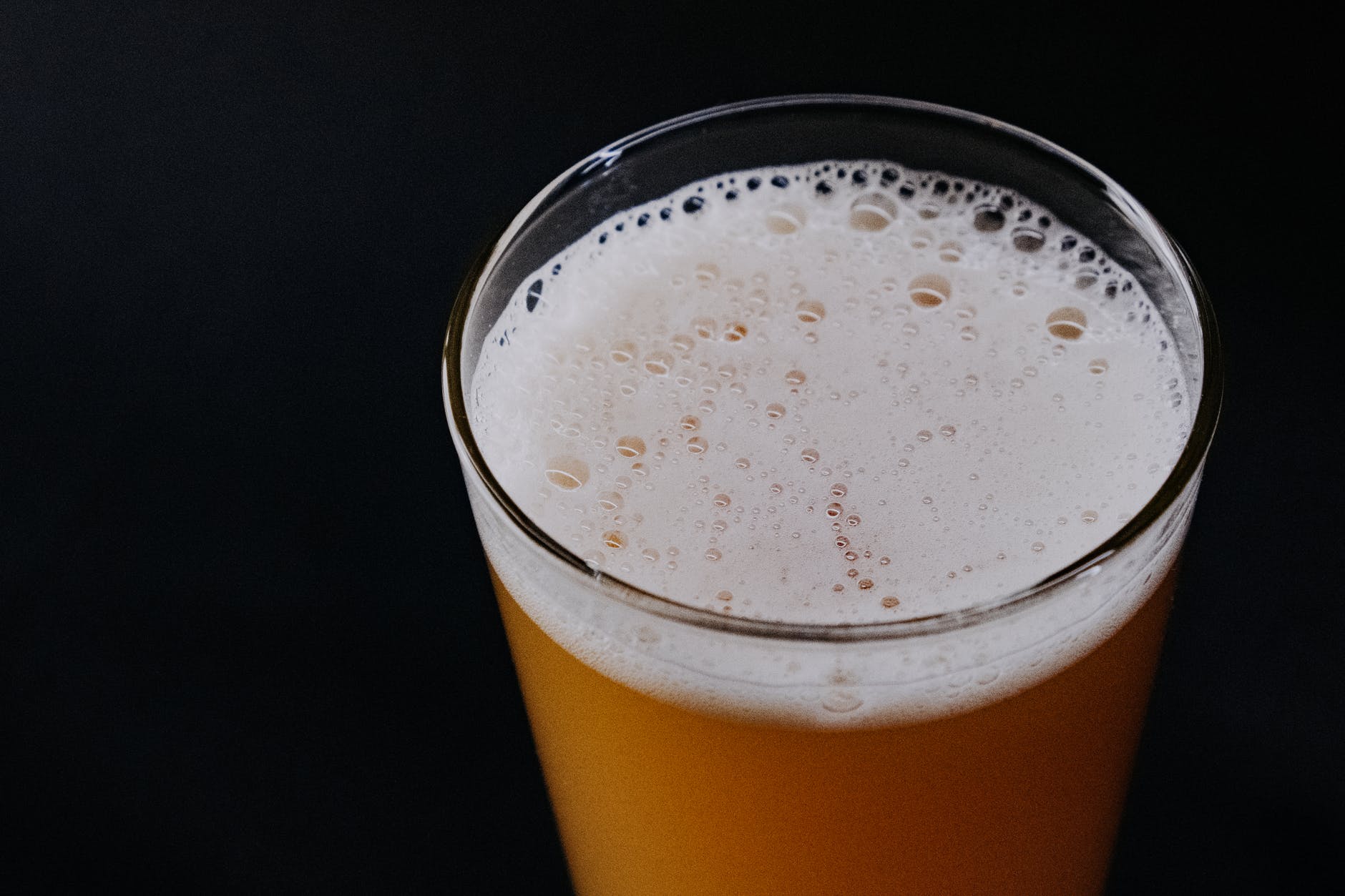
Beneath my desk as I write this post is a large lidded bucket which is spewing out sufficient CO² to make me personally responsible for the depletion of several feet at least of the Morteratsch glacier and will possibly result in a severe ticking off from Greta Thunberg.  According to everything I read carbon dioxide is an odourless gas, but as whatever is bubbling its way out of my bucket smells like the kind of sock you find at the bottom of a child’s sports bag three months after the end of term, and is covered by the kind of living blanket you find on the elderly jam sandwich tucked away at the back of a bedroom drawer, I have severe doubts.  I am supposed to be brewing beer, but it is obvious to me that something has died in the bucket.  I dare not lift the lid – whatever is growing in there, it is clearly desperate to get out.

My daughter bought me the kit and all associated paraphernalia for Christmas.  She clearly felt that I had time on my hands that needed to be filled.  Like almost everybody of my age, I used to brew most of what I drank back in the day when I had very little money and alcohol cost a lot of it.  I have produced many a glass of wine with a fine, rich and creamy head; many a pint of beer with all the aesthetic appeal of Spring Vegetable Soup, and I’ve drunk them all.  The main difference with the current brew is that I am embracing the challenge, not because I have to, but because I want to.  I have drunk sufficient quantities of ‘craft’ beers over the years to lead me to believe that I can, myself, produce something perfectly acceptable (e.g. not strictly poisonous).  I’ve looked at a lot of paintings over the years and I feel sure that I could do that too, if I just had access to a decent brush.  I’ve read enough awful novels to feel confident in my ability to write one of those.  My head is full of songs that I know would be best-sellers if they ever made it out into the world – or at least into The Eurovision Song Contest (b group).  If other people are able to do things, I find it hard to understand why I can’t do them too.

I’m a believer.  I believed when I started writing this poor benighted blog that I could make a decent fist of it.  I believed that more people would want to read it rather than just tick ‘Like’ and try to sell me vitamins.  I believed that many more would read it than ever did.  It is a crazy affliction: to be fully – and painfully – aware of your own limitations, whilst still believing that you might, somehow, overcome them.  When ‘just about acceptable’ is an aspiration, then not reaching it is painful.  I’m not looking to climb Everest – I get a nose-bleed on a high kerb – but I wouldn’t mind standing atop a knoll for a little while.

I once produced a gooseberry ‘champagne’ of breathtaking beauty, and a greengage chardonnay that could have stripped the enamel off a toilet bowl.  The ingredients were similar, the methodology identical, the results, it would appear, not something over which I had any control.  I don’t recall putting any more effort into one than the other.  Managing ‘effort’, if I’m honest, has never been my greatest forte: generally things either come easily, or they frustrate the hell out of me, and the things that frustrate me the most are the very things that make me resolve even harder to succeed.  It is only after I have discovered that I am unable to do something, that I become really determined to do it.

Consequently, I have spent many, many hours over the last three-and-a-bit years working on this blog.  Hard as it is to imagine, I put a lot of effort into each and every post I make, and the disappointment of the realisation that I have fewer readers than Vladimir Putin has rational brain cells is, at times, crushing.  Whilst I understand and accept that the goal is not to have thousands of readers, well… the thing is that it is really, isn’t it?  The joy may well be in the writing, but the point is in people reading it.  This blog has become the equivalent of playing ‘The Toilet Tent’ at Glastonbury and I don’t seem to be able to do anything about it.  It is time, I think, to take a bit of a break, to finish The Play, to record some scripts to see how they sound… 

Okay, so I know that I have done this before.  Last year I was writing four posts a week and it was taking over my life.  (You should try walking around Marks & Sparks, looking at the rows of pants and wondering ‘Can I get a post out of this?’  I even considered getting arrested for shop-lifting, just in case I could find something amusing to say about the experience.)  So I stopped, briefly, and then commenced this more manageable two-times-a-week routine.  I can handle this with time to spare each week.  My problem is that, instead of finding something ‘profitable’ to do with my spare time, I simply write more posts.  I can be frighteningly prolific – some form of literary diarrhoea – and I tend to have so many posts ‘in hand’ that I will probably have had a good four weeks off by the time that you loyal two dozen read this, and I will be raring to go again.  I will already have revisited all of the things I have been unable to finish, finding no doubt that those that I can finish are not worth the effort and those that are worth the effort, I am still unable to finish.

I have no doubt whatsoever that I will be back, just as soon as I write something and think ‘that would be ideal for the blog’ but, for now, that is not the plan.  By the time you read this, my beer will be in the bottles.  I may even have sampled some.  I have a second episode of Frankie & Benny (who are an absolute joy to write) with which I will, for now finish, as it seems to me to be as good a way as any of saying ‘adieu’…

Driving On

Photo by Maksim Goncharenok on Pexels.com

When I was a kid, I wanted to be older… This is not what I expected. (Anon)

If I’m honest, I expected to feel a lot older than I do by now.  Most of the time I feel exactly as I have for years.  One of the few times when I can really put my finger on a creeping sense of age is when I am faced with a long drive, particularly at night, or ‘in weather’.  As a young man I vividly remember listening to old people talking about the difficulties of driving at night and thinking ‘Get a grip!  You’ve got headlights,’ but now I see headlights – other vehicle’s headlights – as the enemy.  I am absolutely fine driving in the dark – as long as I am in the only vehicle doing so – although there is a creeping sense of shame nagging away at the back of my mind that I might be allowing the rationale of ‘Oh, there’s somebody coming towards me: I’ll just slow down a little bit,’ to take hold.  So far, I steadfastly refuse to be cowed by the inability to see, but I can feel my confidence ebbing away along with my ability to chew toffee or to open a packet of peanuts without spilling the entire contents all over the floor.

I’m not certain whether it is a change in the nature of headlights or of my eyes, but the glare of an approaching vehicle – particularly in the rain – seems to flood my entire field of vision.  It is like that moment of alien abduction in Close Encounters of the Third Kind (I sense that I might just have lost everybody under 50 years of age with that reference.  It’s a film.  Look it up!): everything else is engulfed in the blazing white glare that consumes all notion of light and shade.  All that remains is a blinding light and the faint suspicion that Twinkle is playing on the radio…

My whole being is absorbed in the battle to stop myself from joining the ranks of elderly yo-yo drivers who speed up (sometimes to over thirty miles per hour) every time the road is clear and stamp on the brake every time there is something (anything) coming towards them.  I have a nagging suspicion that it might be a battle I am losing.

How do I tackle it?  Well, like all cowards, I turn my back on it.  It is so much easier to face things when you don’t acknowledge them.  It is so much easier to tackle a problem by avoiding it than facing it.  I would sooner sleep on a park bench than tackle unfamiliar roads in the dark of night and I would, almost certainly choose to walk rather than drive like an old man.

I must admit at this point, that I have never really been a ‘car person’.  A car, to me, has always been a means of getting from A to B (via Z if my wife is navigating), but never the reason for it.  I cannot conceive of ever deriving any pleasure from ‘going for a drive’.  I drive only when I’ve got somewhere to go: somewhere I need to be.  When arriving at my destination is all that matters.  If I want to enjoy ‘getting there’, I go by bike, or I walk.  Age does preclude me from roller-skating, scootering, pogo-sticking and skipping, but it should not.  I aim to address this – and I will – just as soon as the weather improves.  My grandson does not approve of my using his skateboard or scooter.  He thinks I might break.  He could just be right – we’ll see.

I appreciate the car whenever the weather is… well, British.  Rain, wind, hail, sleet, snow – all far better viewed from the driver’s seat than the bicycle seat.

And I look after the car because I dread the thought of breaking down.  (I mean, of course, I dread the thought of the car breaking down.  Although now I come to think of it…)  To sit and wait for several hours until an overalled somebody turns up in a little green van, covered in reflective stripes, with the sole intention of making me feel inadequate by starting the car within seconds using nothing but a ‘surely you knew how to do that’ shrug…  I have never felt ‘as one’ with a car (It’s a bloody car!) but I do, generally, know when it is not running properly, and I know the basics of what to do in those circumstances.  (Phone somebody who is at one with the car.)  I could not tell you if the engine sounds anything but normal, because I never hear it.  I never travel anywhere without music playing.  Whenever I hear the car engine, all that goes through my mind is ‘What’s wrong with the radio?’

I have fully embraced SatNav – it doesn’t seem to stop me getting lost, but it does at least give me some idea of where I did it and, occasionally, it helps me get back to where I should have been before I wasn’t (Huh?) – and I have now partially accepted hands-free, although, generally, I have to stop the car to do it.  Whilst the internal combustion engine is a complete mystery to me, I am pretty much au fait with the inner-machinations of my brain and so I tend to ignore most other ‘driver aids’ which, in my own instance, would generally result in nothing other than tempting me to let my mind wander further than it really should – look!  Rabbits!  I cannot adopt the automatic gearbox as I know that it would thrust my brain into neutral.  I have no need for parking aids as I never leave the car in a space that could not fit the QEII.

I think, If I’m honest, I would be perfectly comfortable as the passenger in a self-driving car – I have been married for forty years: I have no illusions about being in charge of anything – and it’s actually quite comforting to think that in the event of an accident, the two vehicles involved could haggle over blame whilst I sit serenely taking in the scenery.  I suppose that this is one thing that old age does prepare you for: being a better passenger.  In life, sooner or later, everyone becomes a bit of a passenger and, in the end, we all just go along for the ride.

Life is like a helicopter.  I don’t know how to operate a helicopter.  (Anon)